
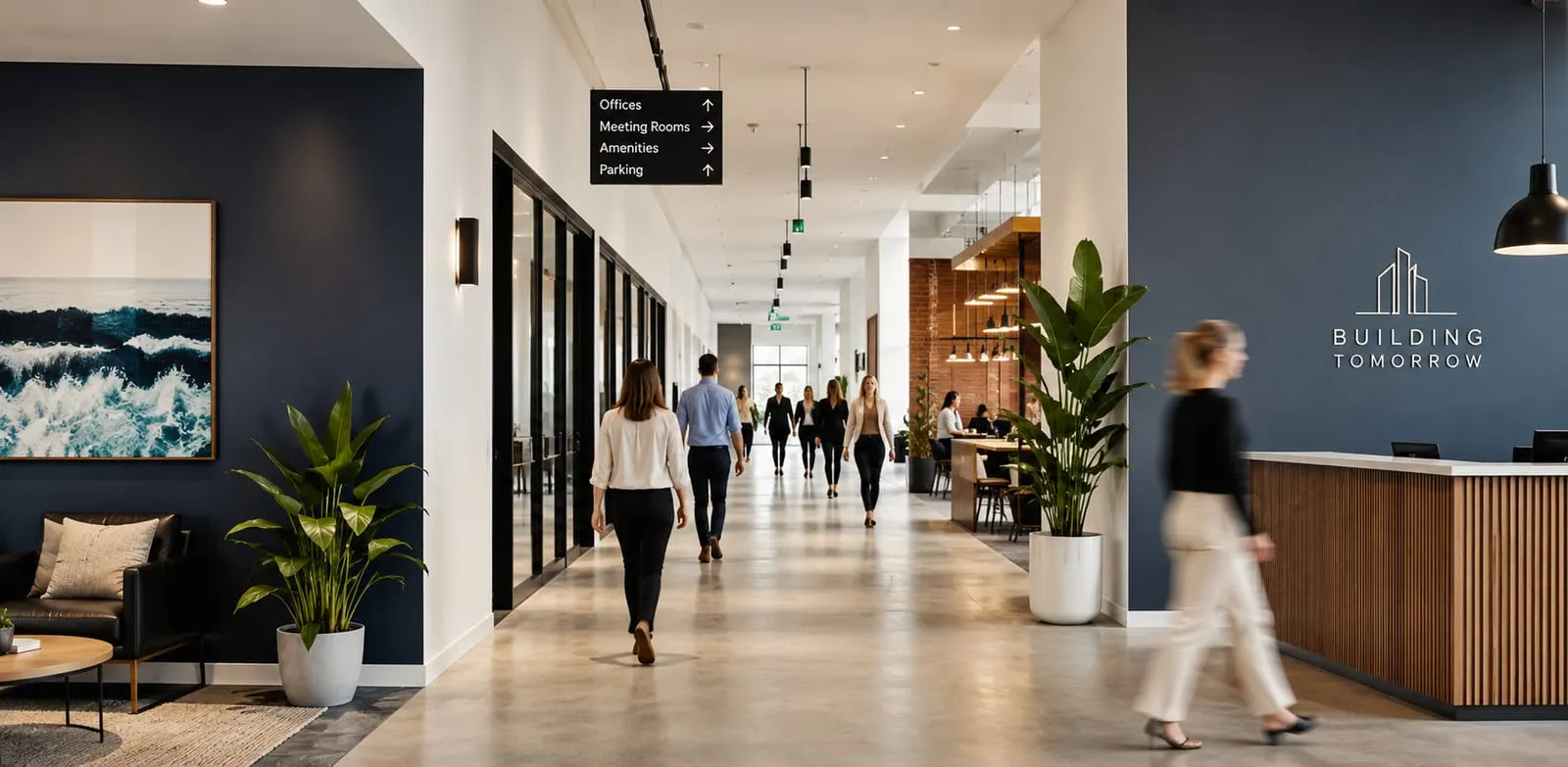
A commercial wall can look freshly painted on opening day and become covered in scuffs, fingerprints and cleaning marks if the wrong coating system is used.
Corridors, reception areas, offices, retail stores, schools, healthcare facilities and hospitality venues all place different demands on painted surfaces.
The best paint for high-traffic commercial areas needs the right balance of scuff resistance, washability, stain resistance, suitable sheen and strong adhesion to the surface underneath.
The goal is simple: choose a paint system that suits how the space is actually used, cleaned and maintained.
What Makes Paint Suitable for High-Traffic Commercial Areas?
A durable commercial paint needs to handle repeated contact and cleaning without quickly losing its appearance.
Scuff resistance matters in corridors, waiting areas and busy offices where bags, chairs, equipment and people regularly contact walls. Washability matters where fingerprints, dirt and marks need frequent removal.
Abrasion resistance protects the coating against repeated rubbing and physical contact. Stain resistance becomes important in schools, retail spaces, hospitality venues and other environments where spills and marks are part of daily operations.
Moisture resistance also matters in bathrooms, amenities, kitchens and other damp areas.
Low-VOC paint is another consideration for occupied workplaces. It can help reduce paint odour and emissions during interior painting, but low VOC does not automatically mean better durability. The coating still needs to meet the performance requirements of the space.
The best result comes from matching all these properties to the actual environment rather than choosing paint based on one feature alone.
What Is the Best Paint Finish for High-Traffic Walls?
The best paint for high-traffic walls depends on how much contact the surface receives, how frequently it is cleaned, and what appearance the business wants.
Higher sheen does not automatically mean a better commercial wall finish.
Matt and Low Sheen
Matt and low-sheen finishes create less reflection and provide a softer appearance.
Low-sheen coatings work well across many offices and general commercial interiors when the selected product provides the required washability.
They also expose fewer minor wall imperfections than highly reflective finishes.
Eggshell
Eggshell sits between low sheen and satin.
It provides a subtle finish while offering good cleaning performance when a durable formulation is selected. This makes it useful for reception areas, corridors and other spaces where appearance and practical maintenance both matter.
Satin
Satin provides more sheen and works well where walls or surfaces receive regular contact and cleaning.
It provides a useful balance when stronger cleaning performance is required without creating the more reflective appearance of semi-gloss.
Semi-Gloss
Semi-gloss creates a harder-looking, more reflective finish and suits surfaces that require regular cleaning or deal with moisture.
It also highlights dents, uneven repairs, and surface defects more clearly.
For this reason, the finish should be selected after considering both performance and the condition of the substrate.
For broader interior finish planning, Luxury Design Painting's professional interior painting service covers surface preparation, coating selection, and professional application.
Which Paint Works Best in Different Commercial Areas?
Different parts of a commercial building face different wear.
A reception wall does not experience the same conditions as a bathroom wall, busy corridor, or warehouse work area. The paint system should reflect those differences.
| Commercial Area | Main Paint Requirement |
|---|---|
| Reception | Durable, refined, and washable finish |
| Corridors | Strong scuff resistance and washability |
| Offices | Washable, low-glare wall coating |
| Retail | Scuff and stain resistance |
| Healthcare | Strong cleaning performance |
| Schools | Durable, washable coating |
| Hospitality | Stain and moisture resistance where required |
| Bathrooms | Moisture-resistant washable finish |
| Doors and trims | Hard-wearing coating for repeated contact |
Corridors deserve particular attention because walls are exposed to shoulders, bags, trolleys, furniture and equipment.
Reception areas need durability without sacrificing presentation. The finish forms part of the first impression customers receive when entering the business.
Offices need a balance between appearance and maintenance. A washable lower-sheen coating provides a practical solution for many conventional office walls.
Retail environments deal with customers, stock movement and frequent cleaning. Scuff and stain resistance become more important in these spaces.
Bathrooms and amenities introduce moisture, while hospitality environments can add grease, food stains and intensive cleaning depending on the location.
The correct paint therefore starts with the room and its exposure, not with a universal product recommendation.
Scuff-Resistant vs Washable Paint: What's the Difference?
Scuff resistance and washability solve different problems.
Scuff resistance describes the coating's ability to resist visible marks caused by objects rubbing against or contacting the painted surface.
Washability describes how well the coating handles cleaning without excessive deterioration to its finish.
Stain resistance is different again. It helps stop substances from leaving permanent visible marks after cleaning.
A busy corridor, for example, needs strong scuff resistance because of repeated physical contact. A frequently cleaned commercial interior also needs good washability.
The strongest durable commercial paint specification considers these properties together.
Do not assume that a washable coating automatically provides the strongest scuff resistance or that a harder-looking finish automatically handles every commercial environment.
Why Surface Preparation Matters as Much as the Paint
The durability of a commercial paint system starts with the surface underneath it.
Even a high-performance coating cannot correct loose paint, grease, unstable filler, moisture damage or poor adhesion underneath.
Before painting begins, the surface needs to be inspected for existing defects.
Dirt, grease and contaminants require proper cleaning. Loose or flaking coatings need removal. Dents, cracks and damaged plaster need appropriate repairs. Glossy or uneven surfaces require suitable preparation before the next coating is applied.
Primer also needs to match the substrate and its condition.
Painting directly over a weak surface simply puts a new coating over an existing problem.
Professional preparation follows a logical sequence: inspect the substrate, identify defects, clean the surface, complete repairs, sand where required, prime correctly and then apply the specified coating system.
For businesses planning a larger repaint, Luxury Design Painting provides professional commercial painting across Sydney, including preparation and coating application for working commercial environments.
Do High-Traffic Commercial Areas Always Need Glossy Paint?
No. High-traffic commercial walls do not automatically need glossy paint.
Modern lower-sheen coatings can provide strong washability and durability when the correct product is specified.
Gloss and semi-gloss finishes provide strong cleaning performance for suitable applications, but they also reflect more light. That reflection makes dents, patching, uneven plaster and other surface defects easier to see.
A highly reflective wall can also create an appearance that does not suit offices, reception areas or premium retail interiors.
Choose the sheen based on the coating's actual performance, cleaning requirements, wall condition, expected contact, moisture exposure and desired appearance.
Should Commercial Buildings Use Acrylic, Epoxy or Other Coatings?
The coating type should match the substrate and service environment.
Acrylic Wall Paint
Quality acrylic coatings suit many conventional commercial interior walls.
They provide a practical solution for offices, reception areas, corridors and retail spaces when the formulation delivers the required durability and washability.
Hard-Wearing Trim Coatings
Doors, frames, skirting and other frequently handled surfaces need coatings designed for greater contact.
These areas experience a different type of wear from large wall surfaces and should be specified accordingly.
Epoxy and Specialist Coatings
Epoxy and other specialist coating systems serve specific applications such as floors, industrial areas and environments with particular hygiene, abrasion or chemical-exposure requirements.
They should not be treated as the universal solution simply because they provide high durability.
The strongest coating is not automatically the right coating.
For demanding work environments, our industrial painting services in Sydney provide coating solutions based on the substrate and operating conditions.
A Commercial Paint Specification Should Consider More Than Colour
Colour matters, but it is only one part of the specification.
Before selecting the coating, assess the substrate condition, daily traffic, contact points, cleaning routine, moisture exposure, required finish and operating hours.
Future maintenance matters as well.
A beautiful colour applied with the wrong coating system creates unnecessary maintenance. A properly specified system combines appearance with the level of performance the space needs.
That distinction becomes especially important across larger commercial properties where different rooms require different finishes.
Why Paint Quality Matters Over the Full Maintenance Cycle
A lower-performing coating can create more work throughout the life of the painted surface.
Marks appear sooner. Cleaning becomes more visible. Touch-ups become more frequent. Eventually, another repaint interrupts the workplace again.
Commercial buyers are not simply choosing litres of paint.
They are choosing a maintenance interval.
A stronger specification considers how the wall will perform after months and years of daily use, not only how it looks immediately after painting.
This makes coating selection, preparation and application quality important parts of long-term building maintenance.
How Professional Commercial Painting Reduces Business Disruption
Good commercial painting projects in Australia are planned around the operation of the business rather than forcing the business to work around the painters.
Large projects can be divided into stages so sections remain available while other areas are being completed.
Painting can also be scheduled around quieter operating periods where the site allows it. Drying and recoat requirements need to be built into the program rather than rushed.
Occupied spaces require protection of furniture, flooring, equipment, staff areas and customer zones. Ventilation and safe access also need consideration throughout the work.
Clear staging keeps staff and site managers informed about which areas are being prepared, painted, drying and reopened.
Professional project planning therefore affects the business just as much as the paint itself.
How to Make Commercial Paint Last Longer
Long-lasting commercial painting starts before the first finishing coat is applied.
Use a coating designed for the specific environment. Repair damaged surfaces first and apply the complete preparation, primer, and coating system required for that substrate.
Once the area returns to use, clean painted walls using methods suited to the coating. Aggressive cleaning products or excessive scrubbing can damage finishes that were not designed for them.
Inspect high-contact areas for damage and deal with local problems before they spread.
Physical protection also makes sense where walls receive repeated impacts from equipment, trolleys, or furniture.
Most importantly, follow the specified coating system. Adding extra coats without addressing poor preparation does not create a better result.
So, What Is the Best Paint for High-Traffic Commercial Areas?
The best paint for high-traffic commercial areas is the coating system that matches the way the specific surface is used.
Start with the type of space, contact level, cleaning frequency, moisture exposure, substrate condition, required appearance, and operational requirements.
For many conventional commercial interiors, a quality washable and scuff-resistant acrylic coating in a suitable low-sheen, eggshell or satin finish provides a practical balance between durability and presentation.
Wet, industrial, hygiene-sensitive or heavily exposed environments require different specifications.
There is no single paint that suits every commercial building.
The right system is selected around the surface and its job.
Frequently Asked Questions
What is the best paint for high-traffic commercial walls?
A washable, scuff-resistant acrylic system works well as paint for high-traffic walls in many conventional commercial interiors. The final choice depends on the substrate, cleaning requirements, and environment.
Is satin or semi-gloss better for high-traffic areas?
Satin provides a balance between durability and appearance. Semi-gloss provides greater reflection and suits surfaces requiring strong cleaning performance. Product performance and the application determine the final choice.
Is matt paint suitable for a commercial building?
Yes. A durable, washable matt coating can suit commercial areas where lower reflection is preferred, and the product meets the required performance level.
What paint is easiest to clean?
Paint specifically formulated for high washability provides the strongest cleaning performance. Do not choose based on sheen alone.
Should offices use low-VOC paint?
Low-VOC coatings are relevant for occupied indoor environments where reducing emissions and paint odour is important. Durability and substrate compatibility still need separate consideration.
How often should a commercial property be repainted?
There is no universal repainting interval. Traffic, cleaning frequency, coating system, substrate condition, moisture, physical impacts and the business's presentation standards determine when repainting is required.
Need a Paint System That Can Handle Your Workplace?
The right commercial paint should suit more than your colour scheme.
It needs to work with the building's surfaces, daily traffic, cleaning requirements and operating environment while delivering the finish customers and staff expect.
Luxury Design Painting brings more than 30 years of painting experience to Sydney properties. Our team can assess your commercial surfaces, determine the required preparation and coating system, and plan the work around the operation of your business.
For professional commercial painting that Australian businesses can rely on, contact Luxury Design Painting to arrange a commercial painting assessment.
admin
Luxury Design Painting