
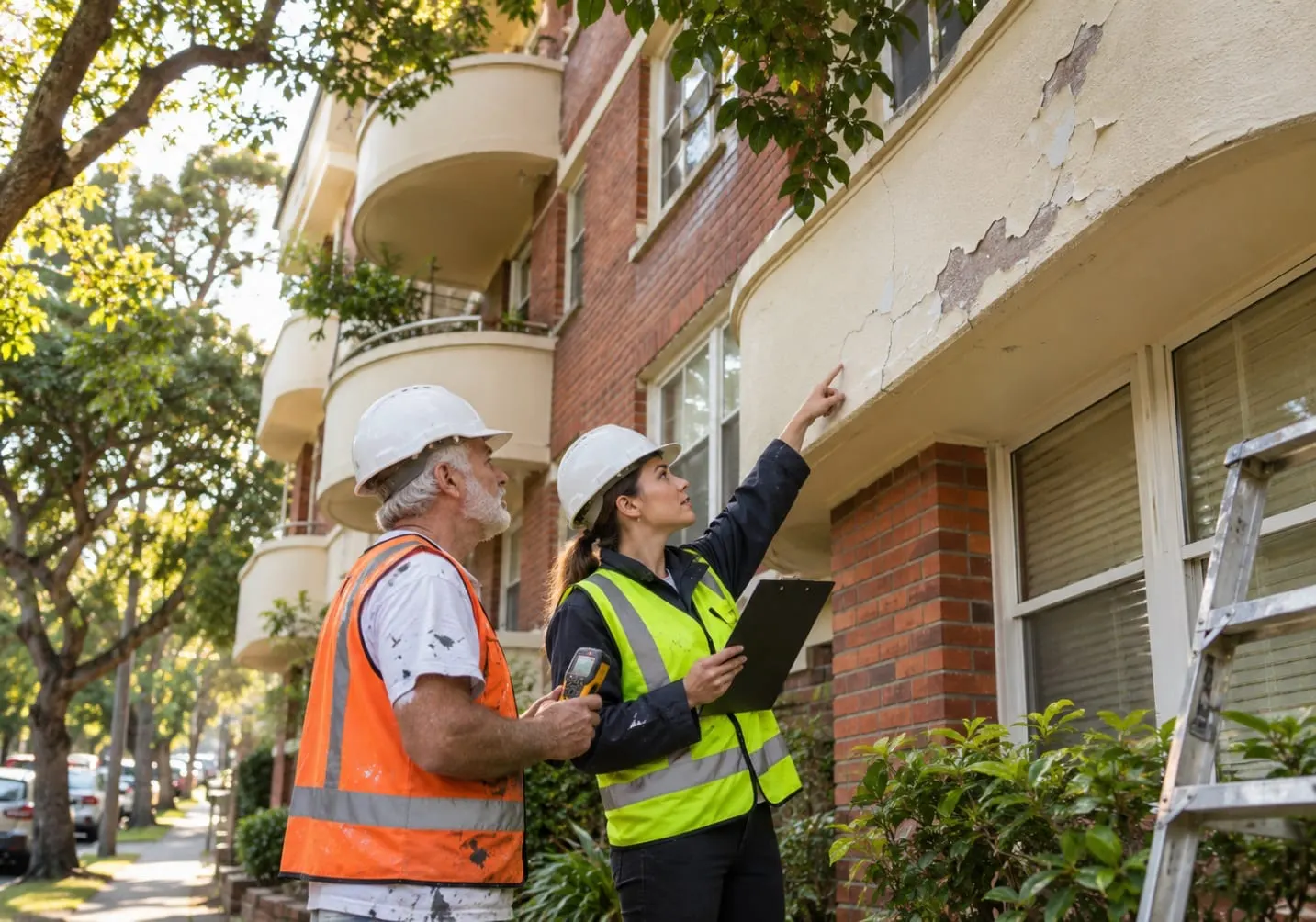
A strata building is inspected before repainting through a structured condition assessment covering existing paint, walls, concrete, render, moisture, cracks, corrosion, and access requirements. The findings determine which surfaces need repairs, what preparation is required, and which coating systems are suitable.
In Sydney, a proper pre-painting inspection should consider AS/NZS 2311:2017, Guide to the Painting of Buildings, alongside relevant safety requirements and the building's actual condition.
It is more than checking whether the exterior looks faded.
Here are the eight main stages of a strata building inspection before repainting.
Step 1: Review Building Records and Confirm Common Property Boundaries
The inspection begins by identifying which surfaces are included in the proposed repaint and who is responsible for maintaining them.
The building's strata plan, by-laws, previous maintenance records and available inspection reports are reviewed.
This establishes whether the work involves:
- External walls and rendered façades
- Balconies, balustrades and soffits
- Shared corridors, stairwells and entrance foyers
- Common-property doors, windows and frames
- Car parks, fences and other shared structures
Surfaces inside individual apartments are generally treated differently from common property.
In NSW, the owners corporation is responsible for maintaining and repairing common property. Exact boundaries and responsibilities depend on the registered strata plan and applicable by-laws.
Why it matters: Confirming responsibility before inspection prevents privately owned surfaces from being incorrectly included in the repainting specification.
Step 2: Conduct a Visual Condition Survey of All Painting Areas
Every proposed painting area is examined for visible coating deterioration and surface damage. The condition survey covers exterior elevations, balcony surfaces, painted metalwork, timber elements and interior common areas included in the project.
Inspectors look for:
- Peeling, flaking and blistering paint
- Chalking, fading and uneven colour
- Cracked or loose render
- Rust staining and metal corrosion
- Water marks and mould growth
- Damaged joints and deteriorating sealants
Defects are photographed, recorded and mapped to their locations.
For larger buildings, the inspection may divide the façade into individual elevations, floors or sections.
Why it matters: A condition map establishes which areas need routine preparation, which require repairs, and whether repainting should cover the entire building or selected sections.
Step 3: Assess Existing Paint Adhesion and Coating Condition
The existing paint is assessed to determine whether it can be safely retained and recoated or must be removed.
A painted surface can appear intact while having poor adhesion underneath. The assessment may include visual examination, controlled scraping and appropriate adhesion testing. Common tests include cross-cut or pull-off adhesion methods, selected according to the existing coating and substrate.
AS/NZS 2311:2017 addresses surface soundness and refers to Australian Standard test methods for evaluating coating adhesion.
The assessment establishes:
- Whether existing paint remains firmly attached
- Whether loose coatings require removal
- Whether previous layers are compatible with the proposed system
- Whether additional surface preparation or priming is necessary
Not every surface requires paint stripping. Sound existing coatings may be suitable for repainting after appropriate preparation.
Why it matters: Retaining unstable paint beneath a new coating can cause premature peeling, even when premium paint products are used.
Step 4: Inspect Render, Concrete, Timber and Metal Substrates
The underlying building materials are examined separately from the paint to identify defects that repainting cannot correct. Different substrates require different inspection considerations.
| Building material | Main inspection requirements |
|---|---|
| Concrete | Spalling, cracking, rust staining, exposed reinforcement and deterioration |
| Rendered masonry | Loose render, surface cracks, hollow areas and previous patch repairs |
| Metalwork | Corrosion, coating breakdown, damaged fixings and surface contamination |
| Timber | Rot, moisture damage, splitting and deteriorating joints |
| Previously painted surfaces | Coating adhesion, chalking, compatibility and surface soundness |
Concrete spalling or suspected reinforcement corrosion may require investigation by an appropriately qualified engineer.
Likewise, movement-related cracks and extensively deteriorated render may require specialist assessment before a coating specification is finalised.
Why it matters: Decorative paint protects and finishes suitable surfaces. It does not restore damaged structural components.
Step 5: Check for Moisture Penetration and Waterproofing Defects
Walls and façade junctions are checked for water entry because moisture can cause new paint to blister, peel, or lose adhesion.
Common inspection locations include:
- Window frames and surrounding sealants
- Balconies and parapet walls
- Roof-to-wall junctions and flashings
- Expansion and construction joints
- Areas beneath gutters and downpipes
- Cracked render and previously repaired surfaces
Discolouration, damp patches, salt deposits and recurring blistering can indicate moisture problems.
Where necessary, inspectors may use suitable moisture measurements or recommend further water ingress investigations.
A moisture meter reading alone does not establish the source of a leak.
Step 6: Assess Hazardous Materials Before Surface Preparation
Older coatings and building materials are screened for potential lead and asbestos hazards before activities that could disturb them.
The building's age, renovation history, available hazardous-material reports, and proposed preparation methods help determine whether further investigation is necessary.
For older painted surfaces, lead-containing coatings may require testing before sanding, grinding, or paint removal.
Suspected asbestos-containing materials must also be assessed before disturbance. An applicable asbestos register should be consulted where required.
Where testing is necessary, appropriate specialists and accredited laboratories are involved.
SafeWork NSW advises that suspected asbestos should be treated as asbestos until appropriate testing establishes otherwise.
Step 7: Assess Building Height, Access and Resident Safety
The inspection identifies how each painting area can be reached safely and what restrictions the work may create for residents.
For multi-storey apartment buildings, access requirements can significantly influence the painting programme and cost.
The assessment considers:
- Building height and façade geometry
- Ground conditions and equipment positioning
- Roof access and suitable anchor arrangements
- Balcony access requirements
- Pedestrian routes, entrances and car parks
- Areas needing scaffolding or elevating work platforms
The proposed access arrangements must follow the applicable hierarchy of fall-risk controls.
In NSW, fall-prevention systems such as appropriate scaffolding or elevated work platforms take priority where reasonably practicable. Industrial rope access may be considered where suitable fall-prevention methods are not reasonably practicable.
Why it matters: Access planning determines how elevated areas can be inspected and painted safely, while helping identify potential resident disruption before work begins.
Step 8: Prepare the Condition Report and Painting Specification
The final inspection findings are documented in a condition report, which informs the repairs, surface preparation, and coating specification.
The report should identify the assessed areas, observed defects, photographs, and recommended further investigations.
It also distinguishes routine painting preparation from remedial work requiring separate assessment.
The resulting painting specification typically covers:
- Each surface and building area included
- Required cleaning and preparation
- Repairs necessary before painting
- Primer and coating system requirements
- Coating application and inspection criteria
- Height access and site protection requirements
- Areas excluded or subject to further investigation
AS/NZS 2311 provides technical guidance for preparing and painting building surfaces. It does not replace engineering assessments, hazardous-material requirements or statutory safety obligations.
A clear specification also helps ensure contractors submit quotations for comparable work.
What Happens If Serious Defects Are Found During the Inspection?
Defects outside ordinary painting work are referred for appropriate assessment before the affected surfaces are specified for repainting.
For example, exposed reinforcement, significant concrete spalling, widespread render detachment or persistent leaks may require engineering or remedial investigations.
The inspection report should distinguish these defects from ordinary coating deterioration. This can lead to separate repair specifications, additional testing or a revised painting programme. A building does not necessarily need every defect repaired at the same time. However, painting must not conceal unresolved conditions that could compromise safety or coating performance.
What Should Strata Committees Receive After the Inspection?
A useful inspection deliverable is a documented assessment that explains the building's condition and what needs to happen before repainting.
For significant strata painting projects, the information should include:
- A register of inspected surfaces and defects
- Photographic evidence and defect locations
- Areas needing further specialist assessment
- Preparation and repair recommendations
- Proposed coating systems and specifications
- Access requirements and relevant exclusions
The level of documentation should match the size and complexity of the project.
For larger repainting tenders, an independent building or coating consultant may prepare the condition assessment and specification so every contractor can quote against the same requirements. The findings can also inform the strata scheme's longer-term maintenance budget.
Frequently Asked Questions
1. Is a visual inspection enough before repainting a strata building?
Not always. A visual inspection identifies obvious defects, but suspected adhesion failure, moisture penetration, concrete deterioration, or hazardous materials may require additional testing or specialist assessment. The inspection depth should reflect the building's condition and proposed painting work.
2. Are paint adhesion tests required on every strata building?
Not necessarily. Adhesion testing is selected according to the existing coating condition, substrate, and project requirements. Where paint is peeling, or previous coating performance is uncertain, testing may help determine whether the coating can be retained. In this matter, good surface preparation in painting helps.
3. Can concrete cancer be identified during a painting inspection?
An inspection may identify warning signs such as concrete cracking, spalling, rust staining, or exposed reinforcement. However, confirming the cause and extent of concrete deterioration may require a qualified engineering assessment. Learn more in our guide to concrete cancer and its repair facts.
4. Who is qualified to inspect a strata building before repainting?
The inspection should be undertaken by people competent to assess the relevant surfaces and coating requirements. Painting contractors or coating consultants can assess ordinary paint conditions. Structural defects, complex waterproofing issues and hazardous materials may require suitably qualified specialists.
5. Does a strata painting inspection help estimate repainting costs?
Yes. The findings establish the extent of preparation, repairs, coating application and access requirements that influence the final quotation. A documented inspection also helps strata committees plan future expenditure. Read our guide to Long-Term Paint Maintenance Plans and learn about long-term paint maintenance of strata properties.
Planning a Strata Building Repaint in Sydney?
A well-defined painting project starts with understanding the building's existing condition. Surface deterioration, moisture problems, and repair requirements need to be identified before the final painting scope and coating system are selected.
Luxury Design Painting can discuss your Sydney strata property's painting requirements and the condition information needed to prepare a suitable painting proposal. Contact Luxury Design Painting to discuss your building's repainting needs and request a quotation.
admin
Luxury Design Painting