
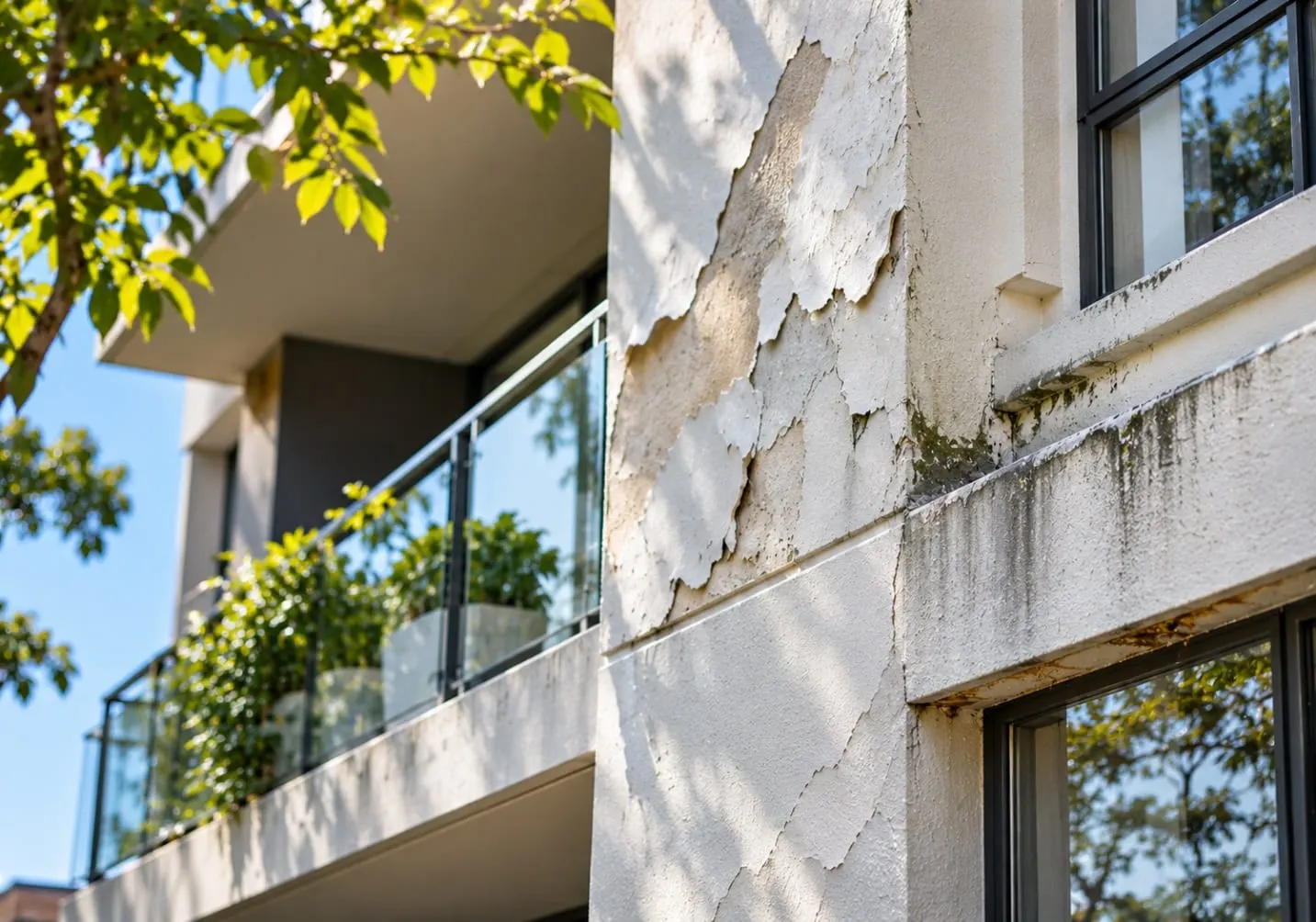
Exterior paint on apartment buildings usually fails because of moisture penetration, UV exposure, poor surface preparation, incompatible coatings, or incorrect paint application. Sydney's coastal conditions can accelerate deterioration, particularly on exposed façades and metalwork.
But not every paint defect means the same thing.
Peeling may indicate adhesion problems. Blistering can point to trapped moisture. Cracking may signal movement in the paint film or the building surface underneath.
Understanding the difference helps strata committees identify what needs repairing, what can be repainted, and when a more detailed façade inspection is necessary.
What Are the Most Common Signs of Exterior Paint Failure?
Peeling, bubbling, chalking, cracking, and discolouration are the main warning signs. Their location and severity help identify the possible cause.
| Paint failure symptom | Most likely causes |
|---|---|
| Peeling or flaking | Moisture, poor adhesion, or inadequate preparation |
| Bubbling or blistering | Trapped moisture, solvent, or heat-related stress |
| Chalking (powdery residue) | UV weathering or deterioration of the paint binder |
| Cracking or alligatoring | Ageing, incompatible coatings or substrate movement |
| Fading or patchy colour | UV exposure, coating quality or uneven application |
| Rust stains | Corroding metalwork, fixings or reinforcement |
| White crystalline deposits | Moisture carrying soluble salts through masonry |
| Mould or dark patches | Persistent dampness, shade and surface contamination |
These symptoms are clues, not definitive diagnoses. A building inspection may be necessary to establish whether the failure is confined to paint or extends into the underlying material.
1. How Does Moisture Cause Exterior Paint to Peel or Bubble?
Moisture weakens paint adhesion when water enters the wall or becomes trapped beneath the coating. As the surface warms, water vapour can create pressure that lifts the paint film, producing bubbles, peeling or flaking.
In Sydney apartment buildings, moisture commonly enters through:
- Cracked render or concrete
- Failed sealants around windows
- Leaking balconies and roof junctions
- Damaged flashings and parapets
- Poorly sealed construction joints
How to fix moisture-related paint failure
First, identify and repair the source of water penetration. Then allow the substrate to dry sufficiently, remove damaged coatings, repair the affected surface, and apply an appropriate primer and paint system.
Simply scraping off the bubbles and repainting can result in the same problem returning.
2. Why Does Sydney's Sun Cause Exterior Paint to Fade and Chalk?
UV radiation gradually degrades components of the paint film, causing colour fading, gloss loss and chalking.
Chalking appears as a powdery residue when you rub your hand across a painted wall.
North-facing elevations generally receive substantial sunlight, while west-facing façades can experience intense afternoon heat. These exposures may cause paint to deteriorate faster than on sheltered elevations.
How to prevent UV-related paint failure
Use exterior-grade coatings with appropriate UV resistance, follow the recommended application thickness, and inspect exposed façades regularly.
Light-coloured finishes may also reduce heat absorption compared with darker colours.
Some chalking is a normal part of paint weathering. Excessive powdering, however, can indicate substantial coating deterioration.
3. How Does Coastal Salt Air Damage Apartment Building Paint?
Salt deposits increase corrosion risks on exposed metal surfaces and can contribute to coating deterioration when combined with moisture.
Apartment buildings around Bondi, Manly, Rose Bay and Sydney Harbour may experience greater salt exposure than protected inland properties.
Balustrades, steel fixings, window frames and exposed metal connections require particular attention.
How to prevent coastal coating failure
Clean salt deposits as appropriate, treat corrosion before repainting and specify a coating system suitable for the metal and its exposure conditions.
Rust must not simply be painted over. Where corrosion affects structural elements or reinforcement, further assessment is necessary.
4. What Happens When Exterior Surfaces Are Not Prepared Properly?
Paint applied over dust, chalk, loose coatings, grease, or deteriorating render may not bond securely to the surface.
Even expensive paint can fail prematurely when the substrate underneath is unstable.
Common preparation mistakes include painting over peeling layers, failing to clean the façade, skipping required primers, and coating surfaces before they have dried sufficiently.
How to correct poor surface preparation
Remove unsound paint, clean the surface, repair defects, and check that the remaining coating is suitable for repainting.
Apply the primer specified for the surface and coating system before finishing.
Preparation needs to match the material. Concrete, render, timber and metal do not necessarily require the same treatment.
5. Can Using the Wrong Paint Cause Cracking or Peeling?
Yes. Incompatible coatings can lose adhesion, crack, or fail when the underlying surface expands, contracts, or moves.
Problems can occur when a new coating is applied over an existing paint system without confirming compatibility.
For example, applying water-based paint directly over an unsuitable glossy coating without appropriate preparation or primer may lead to adhesion failure. Similarly, rigid coatings can crack when movement exceeds their capacity.
How to prevent coating incompatibility
Identify the existing paint system, check adhesion, and follow the new coating manufacturer's compatibility requirements.
Where necessary, use an appropriate bonding primer or remove the incompatible coating.
Not every acrylic-over-enamel application fails. The deciding factors are surface preparation, primer selection, and product compatibility.
6. How Do Incorrect Application and Weather Conditions Affect Paint?
Painting in unsuitable temperatures, excessive humidity, or wet conditions can interfere with adhesion, drying, and film formation.
Applying coatings too thickly or recoating before the previous layer is ready may also create problems.
Common defects include runs, uneven coverage, solvent entrapment, blistering, and premature peeling.
How to avoid application-related failure
Check the manufacturer's temperature, humidity, surface-moisture, and recoating requirements. Allow adequate drying between coats and apply the specified film thickness. For exposed apartment façades, weather planning matters just as much as selecting the right paint. Rain, intense sunlight, and wind can all affect when exterior work can proceed.
7. Why Does Paint Crack on Rendered or Concrete Apartment Walls?
Paint can crack when the substrate moves, existing coatings become brittle, or cracks develop in the render or concrete beneath it. Small surface cracks do not always indicate serious building damage. However, widening, recurring, or water-affected cracks warrant closer investigation. A rigid coating applied over an actively moving crack may split again, even after repainting.
How to repair cracking paint
Determine whether the cracking is limited to the paint film or extends into the substrate. Minor stable defects may be repaired through suitable preparation and filling. Structural movement, significant concrete cracking, and reinforcement corrosion require appropriate professional assessment.
8. Can Low-Quality Exterior Paint Fail Earlier?
Yes. Coatings that are poorly suited to exterior exposure may deteriorate faster under sunlight, rain, and temperature changes.
Interior-grade paint is not designed to provide the same weather resistance as an appropriate exterior coating.
However, a high-priced product is not automatically suitable for every façade.
The correct coating must match the substrate, existing paint, exposure conditions and required performance.
For rendered apartment buildings, this may involve a specialised masonry coating or another compatible system selected following inspection.
How Can Strata Committees Identify the Actual Cause of Paint Failure?
Inspect the failed area, check the underlying substrate, and investigate moisture or adhesion problems before deciding to repaint.
A practical inspection sequence is:
- Record the symptoms: Identify peeling, bubbling, chalking, cracking, or staining.
- Map the affected areas: Determine whether deterioration is limited to one elevation or occurs throughout the building.
- Check moisture sources: Inspect windows, balconies, joints, roof connections, and drainage.
- Assess coating adhesion: Determine whether the existing paint remains sound enough for recoating.
- Inspect the substrate: Look for damaged render, concrete deterioration, and corrosion.
- Specify repairs and coatings: Choose the treatment based on the identified cause.
For multi-storey buildings, elevated areas may need specialist access to inspect properly.
This approach helps prevent unnecessary full-building repaints when isolated repairs may be sufficient.
Should You Repair Failed Paint or Repaint the Entire Building?
Localised failure may only require targeted repairs, while widespread coating deterioration can justify a larger repainting project.
The decision depends on how much paint has failed, whether the existing coating remains sound, and whether the underlying surfaces need repairs.
If one elevation is chalking while other surfaces remain in good condition, staged repainting may be practical.
Where peeling and adhesion failure occur across several elevations, a comprehensive coating assessment is more appropriate.
For strata committees, the objective is to correct the cause without paying for unnecessary work.
How Can Apartment Buildings Prevent Exterior Paint Failure?
Regular inspections, timely waterproofing repairs, suitable coatings and proper surface preparation provide the strongest protection against premature failure.
A practical maintenance plan should include periodic checks of exposed façades, painted metalwork, sealants and areas showing moisture or coating deterioration.
Pay particular attention to coastal elevations, balcony edges and north- or west-facing surfaces.
Schedule cleaning where appropriate and repair small defects before they develop into larger problems.
Maintenance frequency should reflect the building's exposure, coating condition, and manufacturer recommendations rather than a fixed calendar alone.
Frequently Asked Questions
1. Why is exterior paint peeling after only two years?
Premature peeling can result from poor preparation, moisture penetration, incompatible coatings, or unsuitable application conditions. A coating inspection can help identify the failure mechanism before repainting.
2. Can you paint directly over peeling exterior paint?
No. Loose or unstable paint must be removed, and the underlying cause corrected before recoating. For preparation considerations, see our guide to good surface preparation.
3. Does chalky exterior paint mean the building needs repainting?
Not always. Some chalking is normal weathering, but heavy powdering may indicate coating deterioration. The decision depends on adhesion, surface condition, and the extent of wear. Our long-term paint maintenance guide explains how maintenance planning can help.
4. Can concrete cancer cause exterior paint failure?
Yes. Corrosion and deterioration within reinforced concrete can lead to cracking, spalling, and coating damage. Painting alone cannot repair the underlying concrete. Read what concrete cancer is and how it is repaired in Sydney buildings.
5. How often should apartment building exteriors be inspected?
Inspection frequency depends on building condition, exposure, and maintenance history. Coastal or visibly deteriorating surfaces may require more frequent attention. After severe weather or signs of leakage, arrange an earlier inspection rather than waiting for the next scheduled review.
Is Your Apartment Building's Exterior Paint Peeling, Cracking or Bubbling?
Failed paint can be an early warning of moisture problems, deteriorating surfaces, or an unsuitable coating system. Luxury Design Painting can discuss your Sydney apartment building's exterior painting requirements and help determine an appropriate scope for preparation, repairs, and repainting. Address the cause before applying another coat.
admin
Luxury Design Painting