
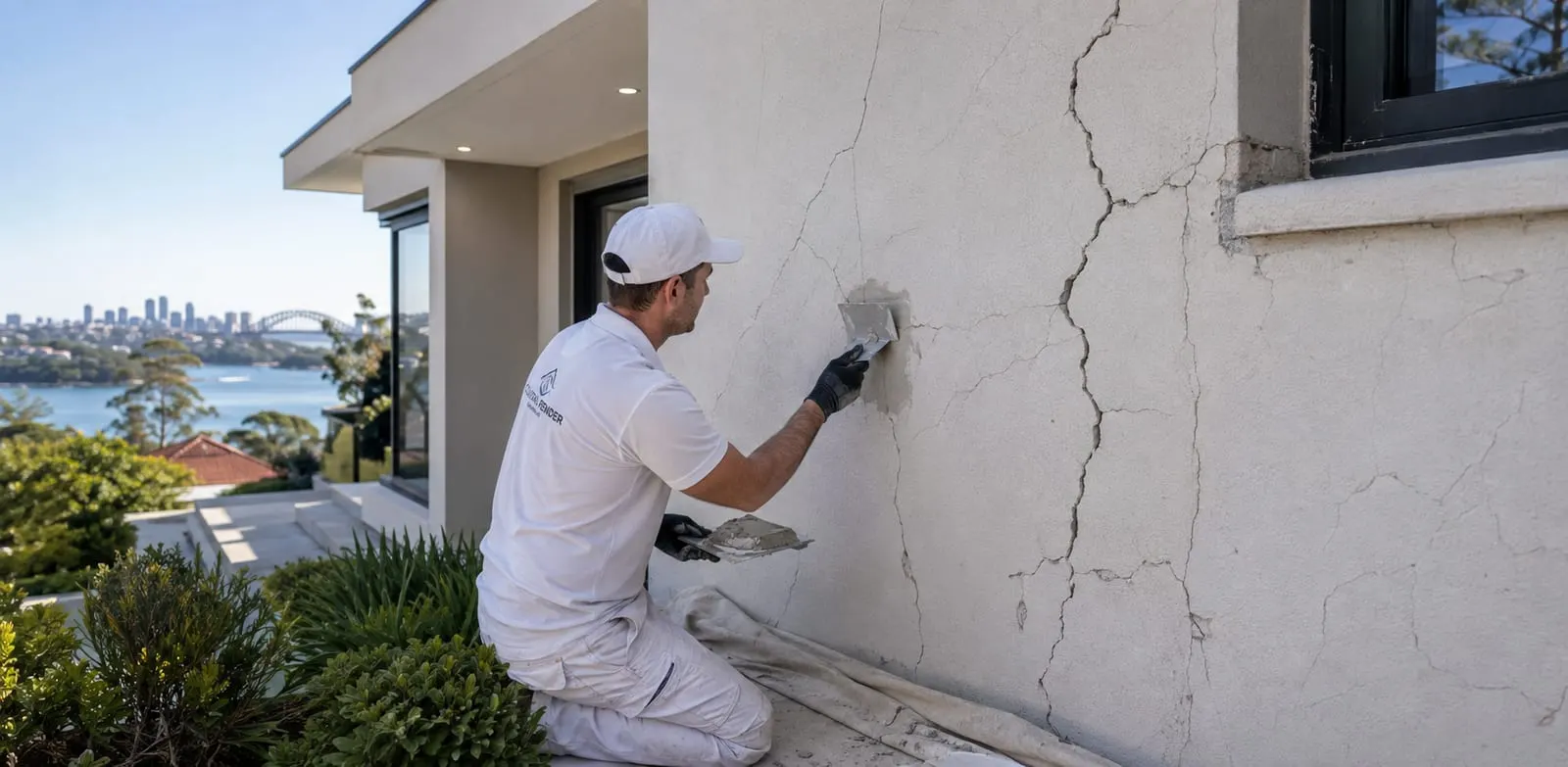
Render cracks because of movement, poor adhesion, incorrect application, moisture, curing problems, or failure in the wall underneath.
A crack does not automatically mean the entire rendered wall needs replacing. Fine, stable surface cracks can come from shrinkage or minor movement. Cracks that keep returning, spread diagonally or appear beside hollow and bulging render need closer investigation.
The key is not just measuring the crack.
Look at its pattern, location, whether it is changing, and what is happening to the surrounding render.
This guide explains what different render cracks can tell you, why they happen and when repair, recoating or replacement is the right option.
Should You Worry About Cracks in Render?
Some render cracks are minor surface defects. Others show that the render, substrate or building underneath is moving or failing.
A single fine crack that stays unchanged is very different from a crack that reopens every few months.
Arrange an assessment when cracks:
- Keep widening or spreading
- Return after previous repairs
- Run diagonally or in a stair-step pattern
- Appear with bulging or hollow render
- Have dampness or moisture staining nearby
- Form around several windows or doors
- Appear across large sections of the facade
Do not judge the problem by width alone.
A narrow recurring crack along a movement point can matter more than a wider but stable surface defect.
What Does the Crack Pattern Tell You?
The shape and location of a crack provide useful clues about what is happening underneath. They do not provide a final diagnosis on their own.
| What You See | What It Can Indicate |
|---|---|
| Fine Hairline Lines | Shrinkage, curing, or coating stress |
| Crazing or Spider Pattern | Application, drying, or surface stress |
| Straight Crack | Joint or change in substrate |
| Diagonal Crack | Movement within the substrate |
| Stair-Step Pattern | Movement through masonry |
| Recurring Repaired Crack | Original cause remains active |
| Cracks With Hollow or Bulging Areas | Loss of adhesion or delamination |
Hairline Cracks
Hairline cracks are very fine lines across the render or coating.
They can develop as cement-based materials shrink during curing or as minor movement places stress on the surface.
The important question is whether they remain stable.
A fine crack that continues growing or repeatedly returns after repair needs investigation.
Crazing or Spider Cracks
Crazing creates a network of small interconnected lines across the surface.
Application conditions, rapid drying, mix problems or stress within the render layer can produce this pattern.
The surrounding surface needs to be checked before deciding whether recoating is enough.
Straight Cracks
A straight crack can follow a construction joint, movement joint or point where two different substrates meet. Its position matters.
If the building was designed to move at that location, simply filling the line without addressing the joint can result in the crack returning.
Diagonal and Stair-Step Cracks
Diagonal cracks and cracks following masonry joints deserve closer attention. They can indicate movement within the wall or masonry underneath the render.
That does not prove the building has a structural problem. It does mean the visible render should not be repaired before the underlying cause is assessed.
Cracks With Hollow or Bulging Render
Cracking combined with a hollow sound, bulging surface, loose edges or visible separation can indicate delamination.
In this situation, the render has started losing its bond to the substrate. Filling the visible crack leaves the loose material around it untouched.
What Causes Render to Crack?
Render cracks when stress exceeds what the render system can accommodate. The source of that stress can sit inside the render itself or deeper within the building.
Movement in the Wall Underneath
The render follows the wall it is attached to.
Settlement, thermal expansion, masonry movement, and movement between different building materials can transfer stress into the rendered surface.
Traditional cement render is relatively rigid. Acrylic and polymer-modified render systems provide greater flexibility and tolerate minor movement more effectively.
Acrylic render is still not crack-proof.
Neither system can permanently bridge significant movement within an unstable substrate.
Poor Surface Preparation or Adhesion
Render needs a clean, sound and compatible surface.
Dust, dirt, loose material, deteriorated paint and unsuitable previous coatings interfere with adhesion.
Moisture also needs to be investigated before a new system covers the wall.
When adhesion fails, the problem can progress beyond a visible crack. Sections of render can become hollow, loose or completely separated from the substrate.
Good preparation therefore starts with inspecting what the render is being attached to.
Incorrect Application or Curing
Render needs to be mixed, applied and cured according to the specified system.
Incorrect mix proportions, excessive thickness and poor application conditions place additional stress on the finished surface.
Hot and windy conditions can pull moisture from cement-based render too quickly. Poor curing then contributes to shrinkage and surface cracking.
Trying to rush the next coating stage also creates problems.
Each render and coating system has its own curing and overcoating requirements.
The Wrong Render System
Different walls need different rendering systems.
Stable brick masonry has different movement and adhesion requirements from fibre cement, AAC, concrete or previously painted masonry.
Selecting a render because it is cheaper or more familiar ignores the most important factor: the substrate.
Our guide comparing acrylic render vs cement render explains why flexibility, adhesion and wall type should determine the system you choose.
Render Covering Movement Joints
Movement and control joints exist so sections of a building can move without transferring excessive stress into surrounding materials.
Render should not simply bridge these joints.
When a rigid coating covers a point designed to accommodate movement, cracking can develop along that line as the building moves.
The joint needs to remain functional within the complete facade system.
Moisture Behind the Render
Moisture becomes particularly important when cracking appears with staining, bubbling, loose coatings or deterioration.
Failed sealants, leaking gutters, drainage problems and water penetration can allow moisture into the wall system.
Repairing the visible render without fixing the water source leaves the cause in place. The moisture problem needs to be identified before the facade is repaired and refinished.
Why Does Render Keep Cracking After It Has Been Repaired?
Render cracks return when the repair fixes the visible line but leaves the cause untouched.
This is common when a crack is simply filled and painted.
The wall underneath could still be moving. Water could still be entering. A movement joint could have been covered. The surrounding render could already have lost adhesion.
The repair product itself also needs to be compatible with the existing render and final coating system.
This is why repeatedly filling the same moving crack is maintenance, not diagnosis.
When a crack keeps returning in the same position, inspect what is happening underneath before repairing it again.
Can Cracked Render Be Repaired?
Yes. Cracked render can be repaired when the cause has been identified, and enough sound material remains around the damaged area. The repair method depends on what has failed.
Minor, Stable Surface Cracking
Fine and stable surface cracking can be prepared and repaired using a compatible system before the wall is refinished. The surrounding render still needs to be sound.
Localised Render Failure
Loose or damaged render requires more than surface filler.
Unsound material needs to be removed back to a stable edge. The exposed substrate can then be prepared before a compatible repair render is applied.
Where the specified system requires reinforcement, it forms part of the repair.
Texture and coating then need to be matched with the surrounding wall. Luxury Design Painting provides render repair in Sydney for damaged, cracked and deteriorated rendered surfaces.
Movement or Structural Cracking
Cracks linked to continuing movement need the underlying cause investigated first.
Applying fresh render over an active problem only hides it temporarily.
The Crack Is Not Always the Problem
Professional diagnosis determines where the failure starts.
The problem can sit in the paint coating, render layer, bond between the render and substrate, masonry or building underneath.
Each one requires a different response.
That distinction is why a proper inspection comes before deciding whether to fill, patch, re-render or recoat the wall.
Can You Just Paint Over Cracked Render?
Paint can deal with certain fine, stable surface cracks when the render underneath remains sound, but it cannot repair every cracked wall.
Flexible, high-build exterior coatings are available for properly prepared rendered and masonry surfaces. These systems can bridge fine surface cracking within their specified limits.
They cannot stabilise moving masonry.
Paint also cannot reattach hollow render, correct widespread delamination or repair a structural crack.
Painting over the problem without assessing it can make the wall look finished while the failure continues underneath.
After the render has been properly repaired, a compatible exterior coating protects the surface and restores a consistent finish. Our exterior house painting services cover the finishing stage for repaired and rendered Sydney facades.
When Does Cracked Render Need to Be Replaced?
Render needs larger-scale removal when substantial sections have lost their integrity or bond to the wall.
Consider broader remedial work when:
- Cracking extends across large wall areas
- Large sections sound hollow or drummy
- Render is bulging away from the substrate
- Pieces are loose or starting to detach
- Adhesion has failed across multiple areas
- The existing system is incompatible with the substrate
- Moisture has caused extensive deterioration
- Previous patches repeatedly fail
One damaged section does not mean the entire facade needs re-rendering.
Sound areas can remain when the failure is localised, and a suitable repair can be integrated into the existing system.
The inspection should determine the extent of removal rather than automatically replacing everything.
How Can You Reduce the Risk of Render Cracking?
Reducing render cracking starts before the first coat goes onto the wall.
Prepare the substrate properly and repair existing defects before rendering. Match the render system to the actual wall material rather than using one product everywhere.
Movement joints also need to remain functional.
Application conditions matter. The render needs to be installed at the specified thickness and allowed to cure according to the product requirements before the next layer is applied.
After completion, maintain the facade rather than waiting for widespread failure.
Check rendered walls for new cracks, loose areas, moisture staining, failed sealants and coating deterioration. Keep gutters, drainage and adjoining seals in good condition so water is directed away from the facade.
Early investigation makes localised repairs possible before deterioration spreads.
Frequently Asked Questions
Are Hairline Cracks in Render Normal?
Fine, stable surface cracking can develop through shrinkage or minor surface movement. Check whether the crack changes, spreads or returns after repair rather than assuming every hairline crack is harmless.
How Do I Know if a Render Crack Is Structural?
Appearance alone cannot confirm structural failure. Diagonal, stair-step and repeatedly widening cracks, especially with other signs of building movement, should be professionally assessed before cosmetic repairs begin.
Why Does My Render Crack in the Same Place?
A recurring crack shows that the cause remains active. Movement, moisture, a joint, substrate failure or poor adhesion can keep reopening the repaired area.
Does Acrylic Render Crack Less Than Cement Render?
Yes. Acrylic and polymer-modified render provides greater flexibility for minor movement than traditional cement render. It still cracks when movement exceeds what the complete system can accommodate.
Do I Need to Replace the Whole Wall of Render?
No. Localised damage can be repaired when the surrounding render remains securely bonded and sound. Widespread hollowing, delamination or bond failure requires broader removal.
Cracked Render on a Sydney Home? Fix the Cause Before the Finish
A lasting render repair starts by finding out why the crack formed.
The visible line could come from surface shrinkage, poor adhesion, moisture, failed render, or movement deeper within the wall. Covering every crack with filler and paint does not address those different problems.
Luxury Design Painting brings more than 30 years of experience across painting, rendering and remedial work in Sydney. We assess the existing surface first, determine what has failed, and then recommend local repair, remedial work, re-rendering, or protective recoating based on the condition of the facade.
If your render is cracking, hollow, separating, or repeatedly failing after previous repairs, request a render and remedial assessment with Luxury Design Painting before the damage spreads.
admin
Luxury Design Painting