
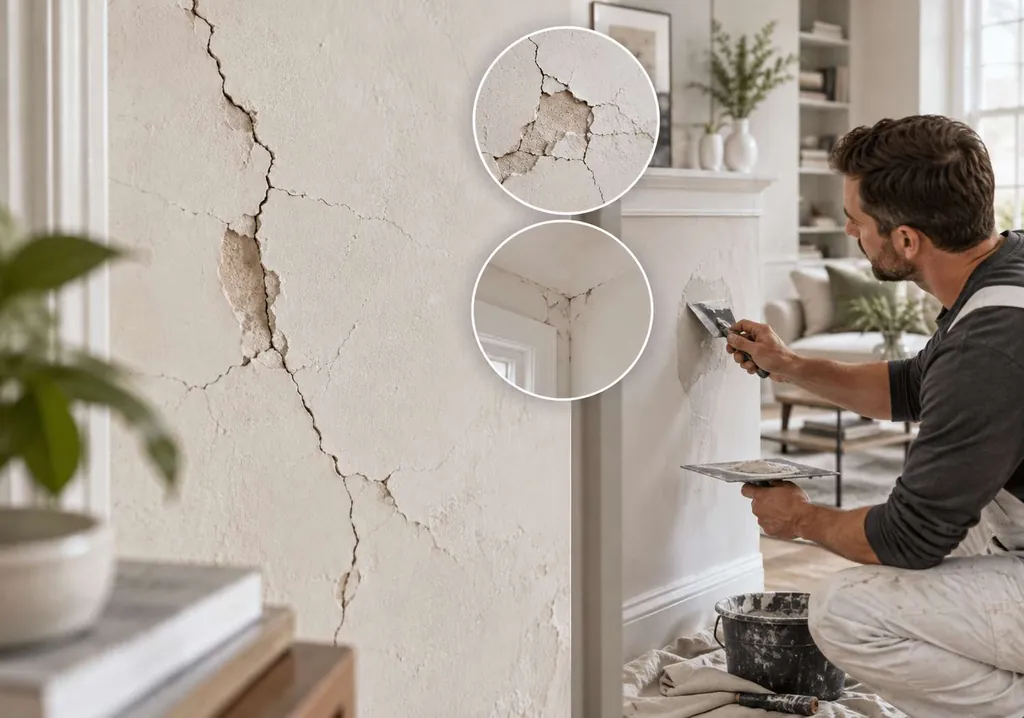
Cracks in plaster walls develop when the plaster, Gyprock joint, underlying substrate, or surrounding building moves, loses adhesion, or is affected by moisture.
A fine, stable surface crack can come from drying or minor movement. A crack that keeps returning, runs diagonally, appears beside water staining, or sits within loose or bulging plaster needs closer attention.
The important question is not simply, “Why are my plaster walls cracking?” It is what is moving or failing underneath the visible line.
This guide explains the main crack patterns, what causes them, when plaster crack repair is enough, and when the wall needs further assessment.
What Do Different Cracks in Plaster Walls Mean?
Different cracks in plaster walls point towards different conditions. The appearance gives you a useful starting point, but the crack still needs to be considered alongside the rest of the wall.
| Crack Appearance | What It Can Indicate |
|---|---|
| Fine hairline | Drying, shrinkage or minor movement |
| Fine web or crazing | Surface drying or application stress |
| Straight line | Plasterboard joint or substrate junction |
| Diagonal crack | Movement that needs closer assessment |
| Around doors/windows | Stress concentrated around an opening |
| Reappears after repair | Original cause remains unresolved |
| Crack with damp stain | Moisture needs investigation |
| Crack with hollow/bulging plaster | Possible loss of adhesion |
Hairline cracks deserve monitoring rather than automatic concern. If the line stays stable and the surrounding plaster remains firm and dry, the problem can remain local to the finish.
A diagonal crack that continues changing is different. The same applies when several cracks appear alongside sticking doors, movement around openings, or other changes within the building.
A crack accompanied by bulging or hollow plaster also needs more than filler. The material can be separating from the surface behind it.
Is the Crack in Plaster or a Gyprock Joint?
Traditional plaster and Gyprock fail differently, so first identify which wall system you have.
Gyprock is plasterboard fixed in sheets. Its joints are set with jointing materials and reinforcement as part of the finishing system. A long, straight crack following a sheet joint can indicate movement or failure around that joint.
Traditional plaster is wet-applied over a suitable substrate. Cracking can occur within the plaster itself, through a weakened bond or because movement from the masonry or other substrate transfers into the finished surface.
Older Sydney homes can contain traditional plaster, while extensions and renovated sections within the same property use Gyprock. Cracks can also develop where old and new construction meet because the materials respond differently to movement.
If you are unsure what is behind your painted wall, understanding the difference between Gyprock and plaster helps establish the right starting point for repair.
What Causes Plaster Walls to Crack?
If you are asking Why are my plaster walls cracking, the answer depends on what is happening to the plaster and the material supporting it.
Several causes deserve attention.
Drying and Shrinkage
Plaster changes as it sets and dries.
Poor application, unsuitable drying conditions, or problems with the material underneath can leave fine surface cracking. Crazing appears as a network of small lines rather than one dominant crack.
The surrounding surface condition helps determine whether the problem is limited to the finish or extends deeper.
Movement in the Building
Buildings move.
Timber framing responds to environmental conditions. Masonry and other building materials also experience movement. Renovations introduce junctions between old and new construction that do not always move in the same way.
This stress can transfer into plaster and plasterboard finishes.
Movement becomes more important when cracks continue widening, repeatedly reopen after repair, or appear alongside other changes in the building.
A plaster crack alone does not diagnose a structural problem.
Poor Surface Preparation or Adhesion
Plaster needs a sound, compatible surface underneath it.
Dust, loose material, unsuitable previous coatings, and inadequate preparation interfere with adhesion. Once the bond starts failing, cracking can develop alongside hollow, loose, or bulging sections.
Covering that area with filler does not restore the failed bond underneath.
Water and Moisture Damage
Roof leaks, plumbing leaks, failed bathroom waterproofing, and other sources of water can damage plaster and plasterboard.
Look beyond the crack itself.
Brown staining, bubbling paint, soft plaster, crumbling material, swelling or sagging provide stronger evidence that moisture is involved.
The leak needs to be stopped before the wall or ceiling is repaired.
Poor Previous Repairs
A previous crack repair can fail when only the visible line was filled.
Using an unsuitable repair material, leaving loose plaster around the crack, or failing to prepare the surface correctly leaves weaknesses behind the finished patch.
The wall can look smooth after painting and then crack along the same line again.
Junctions Between Different Materials
Material junctions deserve particular attention in Sydney home renovations.
An original masonry wall can meet a newer framed Gyprock section. Plaster can also meet timber, concrete, or another substrate around openings and additions.
Different materials respond differently to movement.
The resulting stress concentrates at the junction and becomes visible through the finish.
Why Does My Plaster Crack Keep Coming Back?
A recurring plaster crack means the visible line was repaired while an underlying cause remains active.
The source can be movement, a failed plasterboard joint, hidden moisture, loose surrounding plaster, or a crack continuing through the substrate.
This is particularly important when a crack has already been filled and repainted several times.
Adding another layer of filler does not stop movement underneath it. Likewise, applying a stronger filler does not reattach plaster that has lost its bond with the wall.
The repair needs to work backwards:
Find the cause > Check the surrounding material > Repair the underlying problem > Restore the surface > Repaint
Repeated filler and repainting will not permanently solve an active crack.
Can Cracked Plaster Be Repaired?
Yes. Plaster crack repair works when the cause has been identified, and the surrounding material remains suitable for repair.
A minor, stable crack can require local preparation, appropriate repair material, finishing, sanding, priming and repainting.
Localised damaged plaster needs a different approach. Loose or unsound material needs to be removed as required before the area is rebuilt and blended into the surrounding surface.
Moving or repeatedly returning cracks need the underlying cause assessed first.
Luxury Design Painting's Gyprock and plastering service in Sydney provides professional repair and finishing for cracked, damaged, and water-affected walls and ceilings in Sydney homes.
This allows the plaster repair and final preparation for painting to be coordinated rather than treated as unrelated jobs.
Can You Paint Over Cracks in Plaster?
No. Painting alone is not a plaster repair.
Paint can cover discolouration and make a completed repair blend into the surrounding wall. It cannot stabilise movement, repair a failed Gyprock joint, stop a leak, or reattach loose plaster.
The crack needs to be assessed and repaired first.
After the surface becomes sound, the repaired section needs to be finished and sanded correctly. The appropriate primer or sealer then prepares it for the finishing coats.
This sequence matters on walls exposed to strong natural or artificial side lighting. Poor patching and uneven sanding remain visible after painting.
Where a particularly uniform surface is required, more detailed skim finishing, including a Level 5 finish where appropriate, can improve the final appearance.
Luxury Design Painting's professional Gyprock and plastering integrates repair, setting and finishing with the preparation required before the decorative painting stage.
When Should Plaster Be Repaired Instead of Replaced?
Local repair makes sense when the damage remains confined to a small area, the surrounding plaster stays firmly bonded, and the underlying cause has been resolved.
Replacement becomes a consideration when the material itself has extensively failed.
For example, larger sections need closer assessment when the plaster is loose across a broad area, the wall sounds hollow in multiple locations, a ceiling is sagging, plasterboard has deteriorated after substantial water exposure, or previous repairs continue failing.
The decision is therefore not based on the crack alone.
It depends on the condition of the material around and behind it.
A professional plaster repair service for a Sydney property can determine whether the appropriate solution involves a local patch, plaster repair, skim finishing, replacement plasterboard, or more extensive work before repainting.
When Should You Get a Plaster Crack Professionally Assessed?
Get a crack assessed when its behaviour suggests the problem extends beyond a simple surface defect.
Pay closer attention when a crack continues widening, repeatedly returns, runs diagonally across the wall, appears in several rooms or develops alongside visible movement elsewhere.
Dampness, sagging, bulging and hollow plaster also need investigation.
Doors or windows that begin sticking alongside new or changing cracks provide another reason to look beyond the decorative finish.
A plasterer or painter should also recognise the limit of their diagnosis. Where the signs indicate possible movement within the building rather than a plastering defect, assessment by an appropriately qualified building or structural professional is the correct next step.
How Can You Reduce Future Plaster Cracking?
Future cracking starts with correcting the conditions that caused the existing damage.
Repair water leaks before restoring walls or ceilings. Remove loose material rather than covering it. Prepare the substrate correctly and use repair materials compatible with the existing wall system.
Junctions and plasterboard joints need appropriate treatment rather than being hidden under extra filler.
Drying requirements also matter. Rushing from plaster repair into sanding, priming and painting can compromise the finished surface.
Most importantly, do not use paint as the repair system.
Good workmanship follows a clear sequence from diagnosis through preparation and repair to the final decorative finish.
Frequently Asked Questions
Are hairline cracks in plaster walls normal?
Fine, stable cracks can result from drying or minor movement. Cracks that widen, repeatedly return, or appear with moisture or other movement need assessment.
Why does plaster crack around doors and windows?
Openings concentrate stress within walls. Movement in framing, masonry, joints, or surrounding finishes can become visible first at the corners of doors and windows.
Why does a plaster crack return after I fill it?
The movement, moisture, failed joint, loose material, or substrate problem causing the crack has not been resolved.
Can cracked plaster be repaired without replacing the whole wall?
Yes. Local repair is appropriate when the surrounding material remains sound, and the cause of the damage has been addressed.
Can water damage cause plaster to crack?
Yes. Water can weaken plaster, damage plasterboard, and affect adhesion. Staining, softness, bubbling paint, and sagging alongside cracking indicate that moisture needs investigation.
Should I paint over a hairline crack?
Only after checking that the crack is stable and preparing it correctly. Paint itself does not repair a crack.
Cracked Plaster in Your Sydney Home? Fix the Cause Before Repainting
A good plaster repair starts behind the visible crack.
Identify whether the problem sits in the plaster, Gyprock joint, substrate, or surrounding building. Stop moisture where it exists. Remove failed material, complete the correct repair, and create a properly finished surface before painting begins.
That approach produces a much stronger result than repeatedly filling and covering the same line.
Luxury Design Painting's team brings more than 30 years of experience across painting, surface preparation, and remedial work in Sydney projects. For homeowners looking for professional plaster repairs in Sydney, our team can assess damaged Gyprock and plaster, complete the required repair and finishing work, and coordinate the final repaint through the same project.
Request a Gyprock & Plaster Repair Assessment with Luxury Design Painting.
admin
Luxury Design Painting