
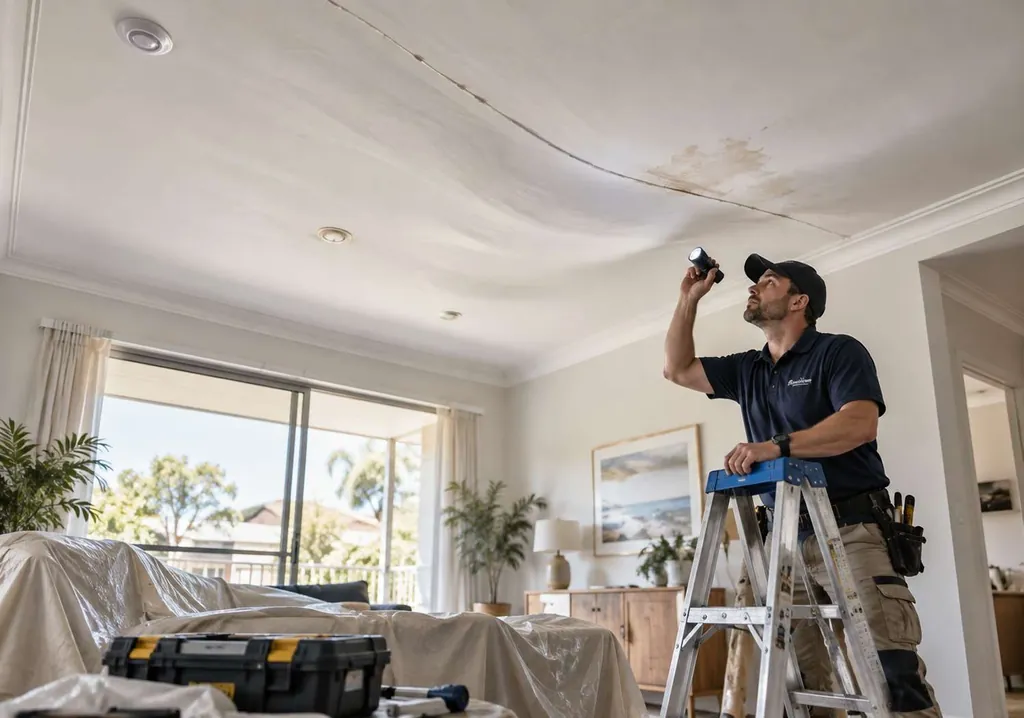
Have you been watching your ceiling sagging and don’t know the reason? Well, a true ceiling sagging involves a change in the position or support of the ceiling lining, although a visible wave or uneven area does not by itself confirm the cause.
The first signs can be subtle. You might notice a slight dip, a wavy ceiling line, cracks that return after repainting, or an area that sits lower than the rest of the ceiling.
The cause can sit in the plasterboard, fixings, battens, framing, or conditions above the ceiling. Water damage can also weaken ceiling materials and their support.
If you are asking “why is my ceiling sagging”, do not treat the problem as a paint defect. Find out what has lost support before patching or repainting the ceiling.
What Are the Warning Signs of a Sagging Ceiling?
A ceiling does not need to be hanging down dramatically before something is wrong.
Look across the ceiling rather than directly underneath it. Natural side light or ceiling lighting can make changes in the surface easier to see.
Watch for these warning signs:
- Wavy or uneven ceiling lines
- Dips or bows between supporting members
- Sections sitting lower than surrounding areas
- Cracks repeatedly forming along joints
- Cracks around lights or other penetrations
- Visible fixing or screw lines
- Soft or swollen plasterboard
- Water staining or bubbling paint
- Sagging that continues getting worse
Recurring cracks deserve particular attention.
A crack that returns after filling and repainting tells you that movement or another underlying problem remains.
The same applies to an uneven ceiling that becomes more noticeable after repainting. New paint has not caused the sag. A smoother, more consistent finish and changes in reflected light can simply make the existing unevenness easier to see.
What Causes a Ceiling to Sag?
A ceiling sags when the lining or its supporting system loses the ability to maintain its intended position.
The cause needs to be identified before deciding whether the ceiling can be repaired or needs more extensive replacement.
Failed or Inadequate Fixings
Plasterboard ceilings depend on a properly installed fixing system.
Problems develop when fixings no longer provide adequate support or when the original installation does not correctly support the sheets. Movement then becomes visible as dipping, joint cracking, or sections of plasterboard dropping away from the supporting system.
The visible crack is not the main problem in this situation.
Repair needs to restore adequate support.
Ageing Ceiling Systems
Older homes can contain ceiling systems installed decades ago, along with later repairs and alterations required in Sydney homes. Materials and installation methods also differ between properties.
A ceiling that has remained flat for years can begin showing movement when its fixings, adhesives, battens or surrounding building components deteriorate or change.
Age alone does not diagnose the problem. The existing ceiling construction needs to be inspected.
Roof Leaks and Water Damage
Water is one of the most important warning signs to investigate.
A leaking roof, plumbing problem or another moisture source can wet ceiling plasterboard. Once plasterboard becomes sufficiently water damaged, it loses strength and can soften, swell, deform or sag.
Look for accompanying signs such as brown stains, bubbling paint, soft areas and damaged joint lines.
Do not repair the ceiling until the leak has been found and stopped.
Luxury Design Painting's Gyprock and plastering service in Sydney includes repair work for damaged walls and ceilings where appropriate, allowing the affected lining to be repaired and properly finished before repainting.
Movement in the Building
Building movement can transfer stress into ceiling linings and joints.
This deserves particular attention where an older part of a home meets an extension or renovated area. Different construction sections can respond differently to movement.
Ceiling cracks can then appear at joints, corners, or changes in construction.
Movement beyond the ceiling lining itself needs appropriate investigation rather than repeated cosmetic patching.
Added Loads and Ceiling Alterations
Changes to a ceiling or roof space can affect how the system performs.
Lighting, fans and other fixtures need appropriate independent support or installation according to their requirements. They should not place unintended loads on plasterboard.
Previous renovation work can also alter framing, battens, insulation or services above the ceiling.
If sagging appears after building work or a ceiling alteration, include that history in the professional assessment.
Problems Above the Ceiling
The visible ceiling is only the bottom part of the system.
Roof-space activity, disturbed materials, damaged supporting components, or other work above the plasterboard can contribute to problems below.
This is another reason the diagnosis should not stop at the painted surface.
Is It Sagging or Just an Uneven Plaster Finish?
Not every visible wave means the plasterboard is separating from its support.
Poor joint setting, uneven repairs, or an inconsistent plaster finish can also become visible under strong side lighting.
The distinction is important.
A finishing defect affects the appearance of an otherwise stable ceiling. True sagging involves a change in the position or support of the ceiling lining.
Look for changes over time.
If the ceiling remains stable but joint lines become visible under certain lighting, the problem can be related to finishing quality. If sections are dropping, cracks keep returning, or the ceiling shape continues changing, the support system needs assessment.
A professional inspection can establish whether the solution requires finishing work, local repair, re-fixing, or more extensive replacement.
Can Water-Damaged Ceilings Be Repaired?
Yes, localised water-damaged ceilings can be repaired when the moisture source has been stopped, and the remaining ceiling system is sound.
The correct sequence matters.
A stain-blocking primer does not repair wet or weakened plasterboard.
Likewise, repainting a brown ceiling stain before fixing the leak simply changes its appearance temporarily.
If the affected plasterboard has softened, deformed or lost adequate support, the damaged material needs appropriate repair or replacement.
For homeowners dealing with water-damaged plasterboard, a professional Gyprock ceiling repair assessment in Sydney can determine what material remains serviceable before the ceiling is refinished.
Why Do Ceiling Cracks Keep Coming Back?
A recurring ceiling crack indicates that the underlying cause has not been fully resolved.
A common cosmetic response is to fill the line, sand it, and repaint the ceiling. The surface looks repaired until movement opens the same joint again.
The underlying problem can involve the plasterboard joint, inadequate support, movement in the ceiling system, moisture, or surrounding building movement.
Repair should therefore follow this sequence:
Diagnose > Stabilise > Repair > Finish > Prime > Repaint
Not:
Fill > Paint > Repeat
This same principle applies to cracks in walls. A successful repair addresses what is happening underneath the finish rather than repeatedly covering the symptom.
Can a Sagging Ceiling Be Repaired Without Replacing It?
Local repair is possible when the damage is limited, and the surrounding ceiling remains sound.
The repair method depends on what has failed.
A small damaged plasterboard section can require local replacement and setting. A support problem can require appropriate re-fixing after the underlying system has been assessed. Uneven finishing can require further plastering or skim finishing rather than replacing the ceiling.
More extensive replacement becomes relevant when large areas have lost support, plasterboard is significantly water damaged, the ceiling has widespread deformation, or the existing system cannot provide a reliable base for repair.
The decision should be made after inspection.
Simply adding screws to a sagging ceiling without understanding the existing system is not a complete diagnosis or repair strategy.
When Is a Sagging Ceiling an Urgent Problem?
Treat a ceiling as urgent when it appears unstable or changes significantly.
A pronounced drop, rapidly increasing sag, loose material, substantial water damage, or sections that appear to be separating require prompt professional attention.
Keep people away from the area underneath when there is concern that ceiling material could detach.
Active water entry also needs immediate action. Water adds weight and damages plasterboard while the source continues feeding the problem.
Where the ceiling problem appears connected to structural movement, roof framing, or another issue beyond plasterboard repair, an appropriately qualified building professional needs to assess that part of the problem.
Do not rely on filler or fresh paint to determine whether a ceiling is safe.
What Does Professional Sagging Ceiling Repair Involve?
Professional repair starts by identifying why the ceiling moved.
The plasterboard, joints, fixings, and visible damage need inspection. Conditions above the ceiling also need consideration where they contribute to the failure.
Once the cause and extent are understood, unsound material can be repaired or replaced as required. Support or fixing problems need to be addressed before the plastering and finishing stages begin.
The repaired surface then needs proper setting, sanding, and preparation.
Where demanding lighting exposes surface variation, detailed skim finishing can be considered to create greater uniformity before painting.
Luxury Design Painting's professional Gyprock and plastering service allows ceiling repair, plaster finishing, and preparation for painting to form one coordinated process instead of treating each stage separately.
Can You Just Repaint a Sagging Ceiling?
No. Paint cannot repair a sagging ceiling.
Repainting should happen only after the ceiling has been made stable and damaged plasterboard or plaster has been repaired.
Paint also cannot stop active water damage, restore failed fixings, or correct movement above the ceiling.
Once repairs are complete, the surface needs to be properly finished. Primer or sealer is then selected according to the repaired surface and any previous staining before the ceiling receives its finishing coats.
This order creates a clean finish without hiding unresolved defects underneath.
How Can You Reduce the Risk of Ceiling Sagging?
Prevention starts with keeping the ceiling system dry, correctly supported, and free from unresolved defects.
Fix roof and plumbing leaks as soon as they are identified. Investigate recurring ceiling cracks rather than repeatedly filling them.
Any new ceiling fixtures need appropriate installation and support. Work in the roof space should also avoid damaging or disturbing ceiling components.
Pay attention to changes rather than waiting for a dramatic drop.
A new dip, recurring joint crack, water stain, or increasingly uneven ceiling provides an opportunity to investigate the problem while the affected area remains limited.
Frequently Asked Questions
Is a slightly sagging ceiling dangerous?
Not necessarily, but a visible sag can indicate an issue with the ceiling lining, support system, finishing, or another condition that needs assessment. If the sag is new, worsening, or accompanied by loose material, water damage, or cracking, arrange an assessment promptly.
Can a water leak make plasterboard sag?
Yes. Water damages plasterboard and can reduce its strength. Stop the leak before repairing or repainting the ceiling.
Why is my ceiling sagging between supports?
Sagging between supporting members can indicate a problem with the plasterboard, fixing system, or support arrangement. The ceiling needs inspection to identify the exact cause.
Why does my ceiling crack after being repaired?
The underlying movement, support problem, moisture, or joint failure remains active. Filling the visible crack does not correct its cause.
Does a sagging ceiling need complete replacement?
Not always. Local damage can be repaired when the surrounding ceiling and supporting system remain sound. Widespread failure requires a broader repair or replacement approach.
Can painters fix a sagging ceiling?
A painter can complete the decorative finish after the underlying ceiling problem is repaired. Where the business also provides Gyprock and plastering work, the repair and repainting stages can be coordinated through the same project.
Sagging Ceiling in Your Sydney Home? Fix the Support Before the Finish
A sagging ceiling needs more than another coat of paint.
First, identify whether the problem comes from damaged plasterboard, failed support, moisture, movement, or another condition above the ceiling. Then stabilise the area, repair or replace failed material, and properly finish the surface before repainting.
Early assessment also helps stop a local ceiling defect from turning into a larger repair.
Luxury Design Painting's team brings more than 30 years of experience across painting, plastering, surface preparation and remedial work on Sydney projects. If your ceiling is dipping, cracking, water damaged, or visibly moving, our professional plaster repairs in Sydney can provide the repair and finishing work required within our scope before the final painting stage.
Contact Luxury Design Painting to arrange a Gyprock and ceiling repair assessment before the damage progresses.
admin
Luxury Design Painting