
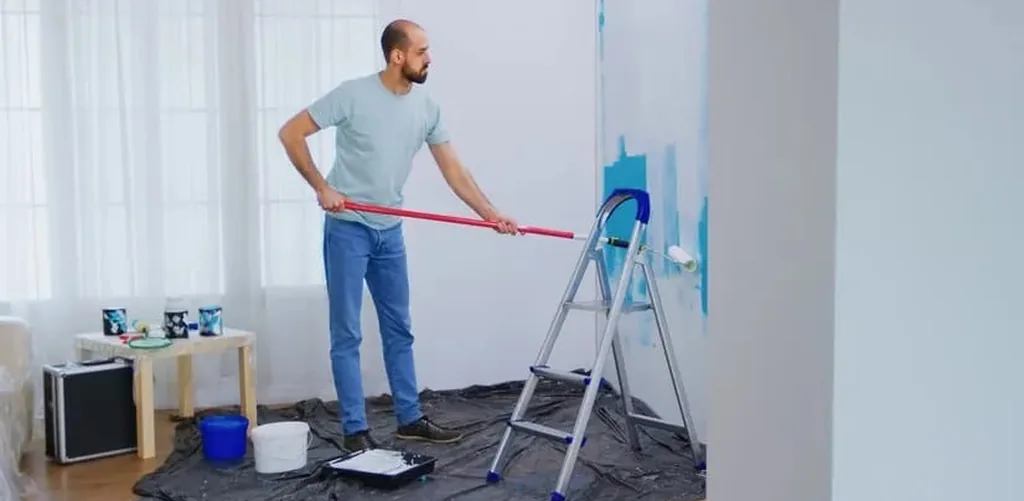
Commercial painting costs in Sydney depend on several interconnected factors, including space type, surface condition, coating specification, access requirements, scheduling needs, and preparation complexity, making every project unique and requiring professional assessment to determine accurate pricing.
Understanding what drives commercial painting costs helps Sydney business owners and property managers compare quotations meaningfully, ask the right questions, and avoid low-price contractors who cut corners on preparation and materials, creating premature failures requiring complete repainting far sooner than properly specified work.
Key Points To Remember
- Every commercial project is unique. Costs reflect specific conditions.
- Surface preparation quality determines long-term coating performance
- Space type and usage affect coating specification requirements
- After-hours scheduling adds complexity and coordination requirements
- Access equipment needs vary significantly by building height and configuration
- Premium coating systems deliver longer service life than budget alternatives
Space Type and Usage Requirements
Space type and usage requirements significantly influence commercial painting costs in Sydney because different environments demand fundamentally different coating specifications, preparation approaches, and scheduling arrangements.
Office environments
Office environments require low-VOC product specifications protecting staff health, detailed work around fixed workstations, cable management systems, and partitioned spaces requiring careful masking and protection. High disruption sensitivity in occupied office buildings typically demands after-hours or weekend scheduling, adding coordination complexity.
Retail spaces
Retail spaces carry higher aesthetic requirements through feature wall specifications, precise brand colour accuracy, and premium scuff-resistant washable coating systems, withstanding constant customer contact. Trading hour restrictions frequently limit access to after-hours work windows.
Warehouse and industrial facilities
Warehouse and industrial facilities present different challenges through large surface areas, heavy equipment present throughout spaces, chemical exposure requirements for floor coating systems, and safety marking specifications, adding scope beyond standard wall and ceiling applications.
Hospitality venues
Hospitality venues, including restaurants, hotels, and entertainment spaces, require rapid turnaround, minimising closure periods, premium finish quality meeting high aesthetic standards, and durable coating systems withstanding intensive cleaning protocols.
Each space type carries unique coating performance requirements. Specifying the wrong coating system for a specific environment creates premature failures regardless of application quality; getting the specification right from the outset determines long-term project value.
Surface Condition and Preparation Requirements
Surface preparation is the single most significant factor influencing commercial painting project scope, determining both immediate application quality and long-term coating performance across the service life.
Surface preparation requirements vary enormously between commercial properties depending on existing coating condition, substrate type, damage history, and previous maintenance standards.
Previously painted surfaces in good condition require cleaning, minor crack filling, light sanding, and standard primer application before topcoats. Surfaces showing significant deterioration, including render cracking, peeling paint, corrosion on metal substrates, or water damage, require substantially more preparation work before any coating can be applied successfully.
Severely deteriorated substrates, including concrete cancer, structural cracking, or failed render, require specialist remedial work before painting programs commence. This work sits outside the standard painting scope and requires qualified remedial contractors addressing underlying structural issues.
Professional commercial painting quotations itemise preparation separately from coating application. Quotations combining preparation and painting in a single line item without methodology detail indicate inadequate preparation planning. A reliable predictor of future coating failures regardless of product quality.
Request detailed preparation methodology from every contractor during the quotation process. Understand exactly what surface condition each contractor is pricing against, what products they’re specifying, and what outcomes they’re guaranteeing from their preparation approach.
Understanding how professional painters minimise business downtime helps Sydney businesses plan commercial painting projects around operational requirements.
After-Hours and Weekend Scheduling Requirements
After-hours and weekend scheduling requirements influence commercial painting project complexity and coordination demands significantly for occupied Sydney commercial buildings.
Businesses operating standard trading hours require painting work scheduled outside operational periods to avoid disrupting staff, customers, and daily operations. After-hours painting between evening and early morning suits offices, restaurants, and retail environments, maintaining full daytime operations. Weekend scheduling provides longer continuous work windows, enabling complete floor-by-floor or zone-by-zone transformations.
After-hours work requires faster-drying product specifications enabling multiple coat applications within compressed overnight windows, additional lighting equipment maintaining application quality standards in unlit buildings, experienced project coordinators managing building access and security protocols, and precise planning ensuring spaces are ready for occupancy by opening time.
The business case for after-hours scheduling remains straightforward. Maintaining trading operations during painting programs protects revenue that would otherwise be lost to closure. Professional contractors experienced in occupied building work plan these logistics systematically, preventing the operational disruptions that amateur scheduling creates.
Preparing your workplace for a commercial painting project covers the practical steps Sydney businesses take before painting commences, minimising disruption throughout project delivery.
Access Equipment and Building Configuration
Access equipment requirements represent a significant variable in commercial painting project scope, determined by building height, site configuration, structural layout, and available access points.
Single-storey ground-level commercial buildings with straightforward access require minimal equipment beyond standard ladders and platforms. Multi-storey commercial facades, high-bay warehouse interiors, elevated industrial structures, and buildings with complex architectural features require specialist access systems matched to specific site conditions.
Access equipment options for Sydney commercial buildings include scissor lifts for moderate height ground-level work, boom lifts for multi-storey facade access, scaffolding systems for large-scale perimeter work, and rope access systems for high-rise buildings where scaffolding proves impractical or cost-prohibitive.
Contractors owning access equipment in-house eliminate external hire costs, delivery logistics, and equipment availability delays affecting project schedules. Verify equipment ownership during quotation processes. Contractors hiring equipment externally pass those costs directly to clients while adding coordination complexity, affecting project timelines.
NSW WorkSafe regulations require licensed operators for all elevated work platforms. Verify operator certification as part of contractor selection. Unlicensed access equipment operation creates serious legal liability for property owners engaging non-compliant contractors.
Coating System Specification and Performance
Coating system specification directly influences both project scope and long-term performance outcomes for Sydney commercial buildings across different exposure conditions and usage requirements.
Standard interior repainting of well-maintained surfaces uses primer and premium topcoat systems suited to the specific environment’s cleaning, traffic, and aesthetic requirements. Specialist applications, including epoxy floor systems, anti-graffiti coatings, fire-rated systems, and high-build texture applications, require different products, application methods, and contractor expertise.
Premium coating systems from established manufacturers, including Dulux Professional, Wattyl Solagard Commercial, and Taubmans Endure, deliver significantly longer service life under Sydney commercial conditions compared to generic trade products without brand specification. This performance difference translates directly into fewer repainting cycles, reduced operational disruptions, and lower total expenditure across ownership periods.
The relationship between coating specification and long-term value is straightforward. Premium systems cost more initially but require replacement less frequently. Budget systems cost less upfront but create repeated repainting cycles, each carrying its own preparation costs, scheduling disruption, and operational impact. Total cost of ownership over realistic service periods consistently favours quality specification over initial price minimisation.
Best paint systems for high-traffic commercial spaces details specific coating system recommendations for Sydney commercial environments experiencing heavy use and demanding cleaning requirements.
Project Scale and Complexity
Project scale and complexity influence commercial painting scope through the combined effect of surface area, number of spaces, coordination requirements, and logistical demands across larger or more complex Sydney commercial properties.
Large-scale commercial projects, including multi-storey office buildings, retail complexes, industrial campuses, and strata commercial properties, require dedicated project management coordinating multiple crews, phased access across different building zones, stakeholder communication with building managers and tenants, and quality control across extended project durations.
Complex architectural features, including ornate facades, heritage elements, irregular surfaces, and detailed trim work, require more time and skill than straightforward flat surface applications, regardless of total surface area. Factor complexity alongside scale when evaluating project scope and contractor capability.
Strata commercial properties add approval workflow requirements, owners’ corporation coordination, and common area access management to standard project logistics. Understanding key points before painting your strata scheme helps strata committees and building managers prepare for commercial painting programs within strata governance frameworks.
Conclusion
The right question isn’t what it costs. It’s what it’s worth?
Sydney businesses that approach commercial painting by asking “how cheaply can we get this done?” consistently pay more over time than those asking “what specification delivers the best long-term outcome for our specific building?” The cheapest quote rarely reflects the full scope required. It reflects what was left out of the specification to win the job.
A commercial space that looks sharp, performs well, and doesn’t need repainting for a decade represents better value than one repainted repeatedly because the original specification cut corners on preparation and product quality.
Get accurate commercial painting guidance tailored to your Sydney property’s specific conditions and requirements. Contact Luxury Design Painting for detailed scope assessment, premium coating recommendations, and after-hours scheduling solutions through our expert commercial painters in Sydney, delivering transparent specifications, proven systems, and minimal business disruption across all Sydney commercial environments.
Praptie
Luxury Design Painting