
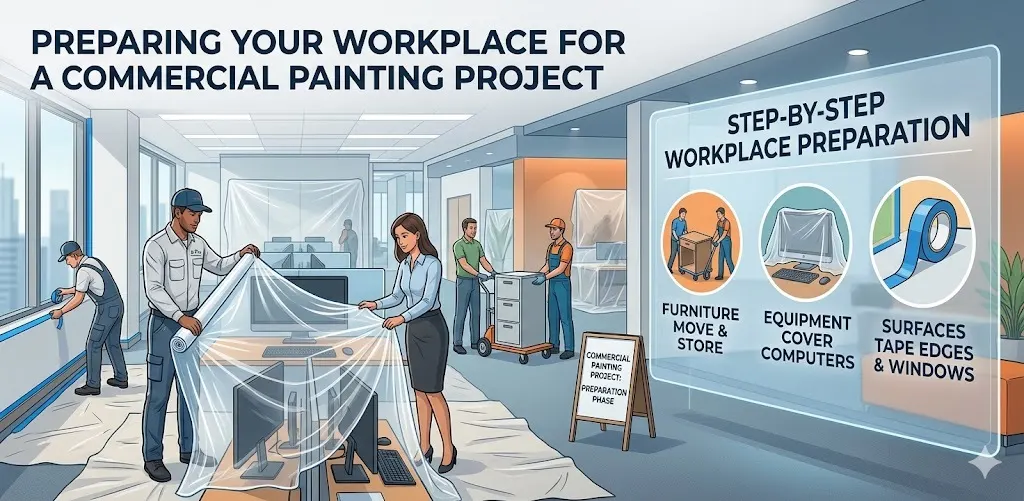
Preparing your workplace for a commercial painting project is the systematic process of relocating furniture, protecting equipment, notifying staff, coordinating access, and securing sensitive materials, ensuring uninterrupted operations and preventing damage during painting activities.
Workplace preparation for commercial painting reduces project delays by 40-60% through systematic planning. Unprepared facilities experience equipment damage, operational disruptions, and extended timelines, at a real cost in lost productivity. Proper preparation enables contractors to work efficiently without impediments.
Effective workplace paint preparation follows the following 5 structured protocols addressing furniture relocation, asset protection, staff communication, access management, and sensitive material security.
Furniture and Equipment Relocation Protocols for Commercial Painting Projects
Furniture relocation is the systematic movement of workplace items from painting areas to protected zones before the contractor’s arrival.
When preparing your workplace for a commercial painting project, you need to relocate furniture and equipment. To relocate furniture and equipment, you have to move workstations, filing cabinets, electronic devices, and fixtures from painting zones to designated storage areas, preventing damage and enabling complete surface access.
During a commercial painting project, furniture and equipment Relocation timing affects project efficiency. Property managers complete furniture and equipment moves 24-48 hours before painting commencement, allowing contractors immediate work access. Last-minute relocations delay project starts by 1-2 days, increasing costs.
Heavy furniture, including desks, conference tables, and storage units, moves to room centers covered with drop sheets, if complete removal proves impractical. Light items, including chairs, computers, and accessories, are relocated entirely to unpainted areas. Wall-mounted fixtures, including shelving, artwork, and whiteboards, require removal, exposing complete wall surfaces.
Electronics, including computers, printers, and telecommunications equipment, need complete relocation, preventing paint dust contamination and chemical exposure. Sensitive equipment failures from inadequate protection carry a heavy cost per incident.
Professional painting contractors like Luxury Design Painting provide furniture protection services if internal resources prove insufficient.
Equipment and Inventory Protection Strategies: Preventing Commercial Asset Damage
Equipment and inventory protection for commercial painting projects is the application of plastic sheeting, drop cloths, masking film, and barrier systems, safeguarding machinery, stock, and fixed assets from paint overspray, dust, and chemical exposure.
Protection requirements vary by workplace type. Retail environments protect merchandise with sealed plastic barriers, preventing contamination. Manufacturing facilities shield production equipment with heavy-duty covers. Medical clinics secure sterile equipment in sealed rooms.
The table below shows specific protection methods required for different commercial asset categories, ensuring appropriate safeguarding based on equipment sensitivity and contamination risk levels.
| Asset Type | Protection Method Required |
| Electronics and computers | Complete relocation or sealed plastic enclosures |
| Machinery and production equipment | Heavy-duty drop cloths with taped edges |
| Retail inventory and stock | Plastic sheeting barriers with floor sealing |
| Medical and laboratory equipment | Room isolation with negative air pressure |
| HVAC systems and ducts | Filter protection and intake covering |
At the same time, floor protection during a workplace commercial painting project prevents paint spills from damaging carpets, tiles, or polished concrete. Contractors apply multiple drop sheet layers with taped seams, creating impermeable barriers. Carpet protection requires breathable canvas rather than plastic, preventing moisture accumulation and mold growth.
Inadequate protection creates damage claims, project delays, and contractor disputes, costing 3-5 times more than proper preparation investments.
Staff Notification and Communication Procedures for Commercial Painting Activities
Staff notification is an important preparation approach when preparing your workplace for a commercial painting project. While preparing for a painting project, the workplace notifies staff through written announcements, scheduled distribution, disruption warnings, and safety briefings. These staff notification approaches inform employees about timelines, access restrictions, and operational changes during painting activities.
Communication timing affects staff cooperation and complaint reduction. Property managers distribute notifications 7-14 days before project commencement. Reminders are sent 48 hours before reinforcing awareness.
Notification content includes painting dates, affected areas, access restrictions, temporary workspace relocations, odor warnings, and emergency contact information. Clear communication reduces disruption complaints by 60-70%.
Safety briefings cover wet paint warnings, floor protection protocols, ventilation requirements, and restricted area identification. Staff understanding prevents accidents and coating damage from premature contact.
Understanding how professional painters minimise business downtime helps managers coordinate staff schedules with painting timelines, reducing operational impact.
Access Coordination and Security Protocol Management During Commercial Painting
During paint project preparation for your workplace, access coordination is the systematic planning of contractor entry, movement, and facility access, maintaining security during external personnel presence.
Access coordination for commercial painting projects, especially in workplaces, establishes entry permissions, security clearances, parking allocations, and elevator scheduling, enabling contractor access while maintaining workplace security and operational continuity.
Security protocols during the workplace painting project require contractor identification verification, building pass issuance, and supervised access to sensitive areas. Property managers provide contractors with alarm codes, elevator access cards, and restricted area permissions 24-48 hours before project start.
Parking allocations prevent contractor vehicles from blocking employee spaces or customer access. Designated loading zones accommodate material delivery and equipment storage. Multi-story buildings schedule elevator access during off-peak hours, preventing operational disruption.
After-hours painting requires security system coordination. Contractors receive temporary alarm codes expiring post-project. Security personnel receive contractor schedules enabling verification without false alarm responses.
Access documentation includes contractor names, vehicle registrations, entry times, and area permissions, maintaining security audit trails.
Sensitive Material and Confidential Document Protection Procedures
Sensitive materials and confidential documents are proprietary business information, client records, financial data, and regulated documents requiring protection from unauthorised contractor access, information exposure, and paint contamination during workplace painting activities.
To protect sensitive material for commercial workplace painting projects, remove unnecessary documents, measure data security, and isolate confidential areas. As a result, you can prevent unauthorised access, information exposure, or material contamination during contractor presence.
Offices relocate confidential files, client records, and proprietary documents to locked storage rooms or off-site facilities. Financial institutions secure cash, negotiable instruments, and sensitive data in vault areas. Medical facilities protect patient records, complying with privacy regulations.
Server rooms require complete isolation with plastic barriers and restricted contractor access. Next, IT departments verify backup systems and climate control maintenance during painting activities.
Chemical or hazardous material storage areas need contractor briefings covering safety protocols and emergency procedures. Painting activities near hazardous materials require special ventilation and fire safety measures.
Document protection failures create regulatory violations, data breaches, and serious legal liabilities in commercial environments.
Conclusion
Preparing workplaces is the best practice when planning for their commercial painting projects. It prevents damage, reduces delays, and maintains operations through systematic furniture relocation, equipment protection, staff communication, access coordination, and sensitive material security. Proper workplace preparation before the commercial painting project reduces project timelines by 40%, prevents damage claims, and enables efficient contractor performance, delivering quality results without operational disruption.
Ensure successful commercial painting outcomes through professional preparation coordination. Contact Luxury Design Painting for pre-project consultation, protection planning, and workplace preparation guidance, delivering seamless commercial painting execution, protecting your assets while maintaining business continuity throughout the transformation process.
Praptie
Luxury Design Painting