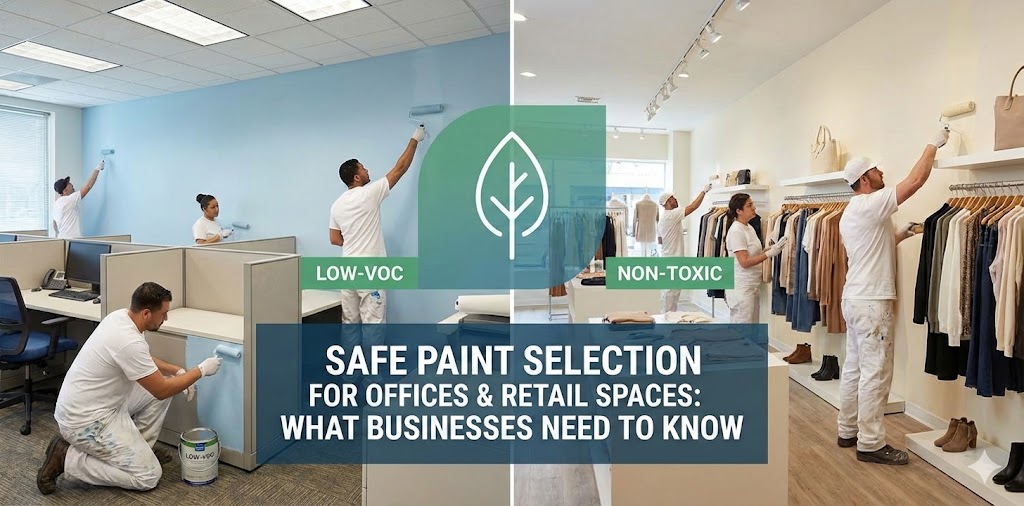
Safe paint selection for offices and retail spaces requires low-VOC formulations, WHS compliance, and strategic colour choices. It protects employees’ health while supporting business goals. The right commercial paint minimises downtime. Meets safety regulations. Creates environments. Where staff perform better, and customers spend more.
Today you’ll learn:
- How low-VOC paints prevent workplace health issues
- Fast-dry formulas minimise business disruption
- Strategic colours boost productivity and sales
- WHS compliance protects staff and reputation
- Proper ventilation is legally required
Why Standard Residential Paints Fail in Commercial Environments Badly
Residential paints weren’t designed for business demands.
They off-gas longer. Disrupt operations more. Fail faster under heavy use.
Commercial spaces need different formulations entirely. Your staff breathe that air 40+ hours weekly. Your customers judge your space instantly.
Wrong paint choices cost you money, productivity, and reputation.
Low-VOC and Zero-VOC Paints: Non-Negotiable for Occupied Workplaces
Volatile Organic Compounds (VOCs) are chemicals that evaporate from wet paint into the air you breathe.
They cause real health problems. Headaches. Dizziness. Nausea. Respiratory irritation.
These aren’t minor inconveniences. There are liability issues waiting to happen.
Low-VOC paints contain reduced chemical emissions. Under 50 grams per litre of harmful compounds.
Zero-VOC formulations have minimal emissions. Less than 5 grams per litre, virtually eliminating airborne toxins.
Both dramatically reduce health risks compared to traditional paints, releasing 150-200g/L.
Your staff works better when they’re not fighting headaches. Your customers stay longer when air quality doesn’t drive them out.
The small premium for low-VOC products pays back through maintained productivity and avoided sick leave claims.
WHS Compliance: Legal Requirements You Cannot Ignore Ever
WHS stands for Workplace Health and Safety, and its regulations aren’t optional suggestions.
They’re legal obligations with serious penalties for violations.
Your compliance checklist includes:
- Updated Safety Data Sheets (SDS) for every product used
- Proper personal protective equipment (PPE) for all painters
- Adequate ventilation during application and curing periods
- Staff notification about painting schedules and safety measures
- Emergency procedures for exposure incidents
Painters working without proper PPE expose your business to liability. Inadequate ventilation violates WHS standards. Missing SDS documentation triggers fines during inspections.
Professional commercial painters handle compliance automatically. DIY approaches or cheap contractors create regulatory nightmares.
Odour Management: Keeping Operations Running Smoothly Without Disruption
Strong paint smells drive customers away instantly.
They trigger complaints. Reduce sales. Damage brand perception.
Low-odour and zero-VOC products solve this problem completely. Staff work normally during painting. Customers barely notice the work happening.
Traditional paints smell for days or weeks. Modern formulations smell minimally for hours only.
Weekend or overnight painting with quick-dry, low-odour products means Monday morning business as usual. No lost revenue. No customer complaints.
Strategic Colour Selection by Space Type and Business Function
| Space Type | Recommended Colours & Effects |
| Office Spaces | Blues/greens aid concentration and calm |
| Collaborative Zones | Yellows/oranges energise creativity |
| Retail Spaces | Reds/yellows drive engagement and urgency |
| Reception Areas | Neutral tones with brand accent walls |
| High-Traffic Corridors | Durable mid-tones hide scuffs better |
| Meeting Rooms | Professional greys/blues promote focus |
Colours aren’t just aesthetic choices. They’re psychological tools that influence behaviour measurably.
Blue office walls improve concentration by 15% in studies. Red retail accents increase impulse purchases significantly. Yellow collaborative spaces boost creative output noticeably.
Choose colours that support your business objectives strategically, not just what looks nice in a catalogue.
Paint Finishes for High-Traffic Commercial Areas That Actually Last
Flat finishes look beautiful but fail commercially.
They show every scuff. Stain permanently. Can’t be cleaned effectively.
Commercial spaces demand durability:
- Eggshell finishes provide a subtle sheen with cleanability
- Satin coatings resist scratches and wipe clean easily
- Semi-gloss works perfectly for high-contact surfaces
- Gloss finishes suit areas needing frequent sanitisation
Retail changing rooms, office corridors, and reception desks see constant contact. They need finishes that withstand cleaning without degrading.
Spending 20% more on proper commercial-grade finishes saves 200% on repainting costs within three years.
Fast-Drying Formulations: Minimising Costly Business Downtime Effectively
Every closed business hour costs revenue directly.
Traditional paints need 24-48 hours between coats. Modern quick-dry formulas recoat in 2-4 hours.
This timing difference changes everything operationally.
Friday night to Monday morning gives 60+ hours. Quick-dry paints complete entire offices in one weekend. Staff return to fresh spaces on Monday without losing a single workday.
Retail spaces paint overnight between closing and opening. Customers never see wet paint or smell fumes.
Fast-drying technology isn’t just convenient. It’s essential for minimising revenue disruption.
Substrate Suitability: Matching Coatings to Surface Types Properly
Different surfaces need different paint technologies.
Match your coating to your substrate:
- Acrylic latex works on most interior surfaces with versatility
- Epoxy-based paints suit heavy-duty, high-impact areas
- Speciality primers prepare difficult surfaces like metal
- Waterborne urethanes provide maximum durability for floors
Plasterboard needs a different treatment than concrete. Metal surfaces require rust-inhibiting primers. Previously painted walls need compatibility testing.
Wrong substrate-coating combinations fail prematurely regardless of paint quality. Professional painters assess substrates properly before recommending products.
Brand Alignment: Creating Cohesive Professional Environments That Reinforce Identity
Your physical space communicates brand values constantly.
Mismatched colours confuse visitors. Random selections look unprofessional.
Incorporate company branding colours strategically. Feature walls in brand primaries. Accent colours in secondary brand tones. Neutral bases that let branding shine.
This approach creates cohesive professional environments where every element reinforces your identity consistently.
Clients notice the attention to detail. Staff feel pride in polished spaces. Brand recognition strengthens through environmental consistency.
Why Professional Commercial Painters Deliver Better Outcomes Than DIY Approaches
Commercial painting isn’t just residential painting at larger scale.
It requires specialist knowledge of regulations, products, and techniques.
Professional commercial painters understand WHS compliance inherently. They stock low-VOC products exclusively. They schedule around business operations expertly.
They know which finishes withstand commercial traffic. Which primers suit different substrates? Which application methods minimise disruption?
DIY approaches save money upfront but cost more through failed coatings, regulatory violations, and operational disruptions.
Luxury Design Painting specialises in commercial projects where safety, compliance, and minimal disruption matter critically. Get expert guidance on paint selection that protects your business and enhances your brand.
